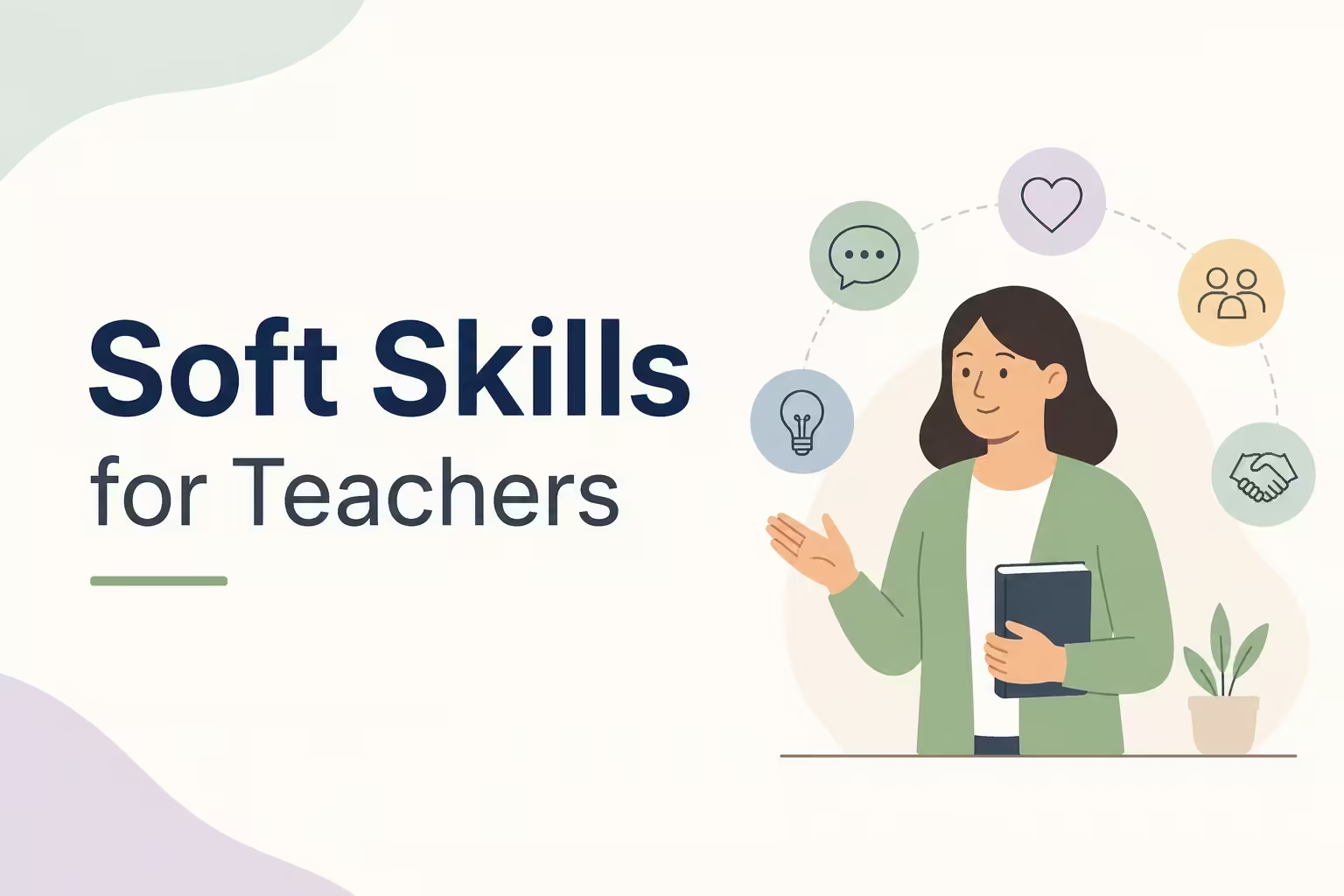
Introduction: Why Soft Skills for Teachers Matter More Than You Think
Imagine a teacher who knows every fact in the textbook — but cannot connect with students. They explain everything correctly, but the classroom feels cold. Students tune out. Nobody learns.
Now imagine a teacher who maybe does not know every answer — but listens carefully, speaks clearly, and makes every student feel valued. That classroom feels alive.
The difference? Soft skills for teachers.
Soft skills are personal and social abilities. They are not about what you know. They are about how you behave, communicate, and connect with others.
For teachers, soft skills are just as important as subject knowledge — maybe even more so. In fact, research shows that students learn better from teachers they trust and feel comfortable with.
In this guide, you will learn:
- What soft skills for teachers really are
- Why they matter for career growth and student success
- The top skills every teacher needs
- Common mistakes to avoid
- Practical tips to develop these skills today
Whether you are a new teacher, an ESL educator, a student preparing for a teaching career, or a professional looking to grow — this guide is for you.
What Are Soft Skills for Teachers?
Soft skills for teachers are non-technical abilities that help educators work effectively with students, parents, and colleagues.
They are different from “hard skills.” Hard skills are things you can measure — like knowing grammar rules, math formulas, or science facts. Soft skills are harder to measure, but they are just as real and just as important.
Think of it this way:
| Hard Skills | Soft Skills |
|---|---|
| Knowing subject content | Communicating clearly |
| Lesson planning | Showing patience |
| Grading papers | Building empathy |
| Using technology | Managing conflict |
| Writing curricula | Motivating students |
Soft skills help you apply your hard skills in a way that actually works. Without them, even the best lesson plan can fall flat.
Why Soft Skills for Teachers Are So Important
Soft skills matter in every profession. But in teaching, they are absolutely essential. Here is why:
1. Students Need More Than Information
A Google search can give students information in seconds. What Google cannot do is inspire a struggling student, explain something in five different ways, or notice when a child is having a hard day. That is the teacher’s job — and it requires strong soft skills.
2. Classrooms Are Complex Social Spaces
Every classroom is a mix of different personalities, learning styles, and emotional needs. A teacher must manage all of this at once. Strong communication, empathy, and conflict-resolution skills make this possible.
3. Employers and Schools Look for These Skills
If you are applying for a teaching job, soft skills can set you apart. Principals and hiring committees look for teachers who are patient, positive, and professional — not just qualified on paper.
4. They Help With Career Growth
Teachers with strong soft skills are more likely to become department heads, mentors, or school leaders. They build better relationships and get more opportunities.
5. They Reduce Burnout
Teaching is stressful. Teachers with good emotional intelligence, time management, and communication skills handle stress better and stay in the profession longer.
The Top 10 Soft Skills for Teachers
Let us explore the most important soft skills every teacher should develop.
1. Communication Skills
This is the foundation of teaching. Good communication means:
- Explaining ideas clearly and simply
- Listening actively to students
- Adjusting your language for different ages and levels
- Giving clear instructions
- Speaking and writing professionally
Example: An ESL teacher notices her students look confused. Instead of repeating the same explanation, she uses a picture, a simple example, and a short activity. That is strong communication in action.
Pro Tip: Use short sentences. Pause often. Ask students to repeat instructions back to you.
2. Empathy
Empathy means understanding how someone else feels. For teachers, this is gold.
Empathetic teachers:
- Notice when students are struggling
- Respond with kindness, not frustration
- Create a safe space for learning
- Build real trust with their class
Example: A student fails a test. An empathetic teacher talks to the student privately, finds out they had a difficult week at home, and offers extra support.
3. Patience
Teaching takes enormous patience. Students learn at different speeds. Some need the same explanation five times. Patience helps you stay calm, stay positive, and keep going.
Signs of a patient teacher:
- They do not rush students
- They repeat instructions without sighing
- They celebrate small progress
- They stay calm when things go wrong
4. Adaptability
Lessons do not always go as planned. Technology fails. Students ask unexpected questions. A student gets sick. A school day changes suddenly.
Adaptable teachers:
- Adjust their plans quickly
- Stay calm under pressure
- Find creative solutions
- Welcome change instead of fearing it
Example: A teacher planned a video lesson, but the internet is down. An adaptable teacher switches to a group discussion activity — and makes it work just as well.
5. Classroom Management
This is not about being strict. It is about creating an environment where learning can happen. Good classroom management includes:
- Setting clear rules and expectations
- Using positive reinforcement
- Managing student behavior calmly
- Keeping students on task
- Handling disruptions without drama
Key phrase: Prevent problems before they start.
6. Emotional Intelligence (EQ)
Emotional intelligence means understanding and managing your own emotions — and recognizing the emotions of others.
For teachers, high EQ means:
- Staying calm when a student is rude
- Not taking bad days personally
- Reading the mood of the room
- Responding to emotion with wisdom, not reaction
7. Active Listening
Good teachers do not just talk. They listen. Active listening means:
- Making eye contact
- Not interrupting
- Asking follow-up questions
- Repeating back what you heard
- Showing you are fully present
Example: A student says, “I just don’t get it.” Instead of launching into another explanation, an active listener asks: “Which part feels confusing? Let’s start there.”
8. Collaboration and Teamwork
Teachers work with other teachers, administrators, parents, and support staff. Collaboration skills include:
- Sharing ideas openly
- Accepting feedback gracefully
- Working toward shared goals
- Supporting colleagues
- Communicating professionally in meetings
9. Time Management
Teachers have a lot to do. Lesson planning, grading, meetings, professional development, parent communication — the list is endless.
Strong time management means:
- Prioritizing tasks
- Setting deadlines for yourself
- Avoiding procrastination
- Using planning tools (calendars, apps, schedules)
- Saying “no” to non-essential tasks when needed
10. Positive Attitude and Enthusiasm
Enthusiasm is contagious. When a teacher is genuinely excited about a topic, students feel it. A positive attitude helps:
- Create a fun, energetic classroom
- Motivate struggling students
- Build a strong classroom culture
- Make difficult topics feel approachable
Remember: You do not have to be overly cheerful all the time. Authentic, consistent positivity is what counts.
Common Mistakes Teachers Make With Soft Skills
Even experienced teachers make these mistakes. Knowing them helps you avoid them.
❌ Talking Too Much, Listening Too Little
Many teachers fill every minute with talking. Students need time to speak, think, and ask questions. Practice the “70/30 rule” — students should be active at least 70% of the time.
❌ Being Too Rigid
Sticking to a lesson plan when students are clearly lost is a mistake. Check for understanding often. Be willing to slow down or change direction.
❌ Ignoring Student Emotions
Pushing ahead when a student is upset, scared, or disengaged leads to bigger problems later. Acknowledge emotions. Address them briefly and kindly.
❌ Using Negative Language
Saying “You’re wrong” shuts students down. Instead, say “Good try — let’s look at this another way.” Language shapes classroom culture.
❌ Skipping Self-Care
You cannot pour from an empty cup. Teachers who neglect their own mental health burn out fast. Rest, exercise, and set boundaries at work.
Practical Examples of Soft Skills in the Classroom
Here are real-life scenarios showing soft skills in action:
Scenario 1 — Empathy: A usually active student is quiet all day. A skilled teacher notices, checks in privately, and discovers the student is dealing with a family issue. The teacher adjusts expectations for that day and connects the student with support resources.
Scenario 2 — Communication: An ESL teacher uses visual aids, gestures, and simple vocabulary to explain a complex grammar rule. She checks understanding with a quick quiz and adjusts based on results.
Scenario 3 — Adaptability: During a science experiment, the materials do not work. The teacher calmly turns it into a “What went wrong?” discussion — teaching critical thinking instead of the original lesson.
Scenario 4 — Conflict Resolution: Two students argue during group work. The teacher listens to both sides without judgment, reminds the class of shared goals, and helps the students find a compromise.
Step-by-Step Tips to Improve Your Soft Skills as a Teacher
You do not need to be perfect. You just need to keep growing. Here is how:
Step 1: Do a Self-Assessment
Write down your strongest and weakest soft skills. Be honest. Ask a trusted colleague for feedback too.
Step 2: Focus on One Skill at a Time
Trying to improve everything at once is overwhelming. Pick one soft skill — say, active listening — and practice it every day for a month.
Step 3: Observe Great Teachers
Watch experienced colleagues in action. Notice how they handle conflict, explain difficult ideas, or respond to student emotions.
Step 4: Read and Learn
Books like The Skillful Teacher by Stephen Brookfield or Mindset by Carol Dweck offer powerful insights. Listen to education podcasts too.
Step 5: Reflect Daily
At the end of each school day, ask: What went well? What would I do differently? Reflection is one of the fastest ways to grow.
Step 6: Ask for Feedback
Request honest feedback from students (especially older ones), colleagues, and mentors. Use it constructively.
Step 7: Practice Outside the Classroom
Soft skills apply everywhere — at home, in conversations, in community groups. Every interaction is a chance to practice communication, empathy, or patience.
Expert Tips for Building Soft Skills as a Teacher
Here are insights drawn from experienced educators and education researchers:
- “Presence matters more than perfection.” Students remember how you made them feel, not whether you followed the lesson plan exactly.
- Build relationships first. The first two weeks of school should focus on connection, not content. Strong relationships make everything else easier.
- Use your name and their names. Using student names builds connection. Let students use your first name if your school culture allows — it builds trust.
- Model the skills you want to see. Want students to be patient and kind? Show them what that looks like every single day.
- Celebrate effort, not just results. Praise the process. “I can see you worked really hard on this” is more powerful than “Great score!”
Frequently Asked Questions (FAQs)
1. What are soft skills for teachers?
Soft skills for teachers are personal and interpersonal abilities — like communication, empathy, patience, and adaptability — that help educators connect with students and work effectively in schools.
2. Why are soft skills important in teaching?
They help teachers build trust with students, manage classrooms effectively, communicate clearly, and grow professionally. Without them, even strong academic knowledge may not translate into good teaching.
3. Can soft skills be learned and improved?
Yes. Soft skills can be developed with practice, reflection, and feedback. Nobody is born with them fully formed — they grow over time.
4. What is the most important soft skill for a teacher?
Many experts say communication is the most critical. But empathy and patience are equally important, especially for teachers working with young learners or language students.
5. How do soft skills help with classroom management?
They help teachers build respectful relationships, set clear expectations, resolve conflicts calmly, and motivate students — all of which reduce behavioral problems.
6. Are soft skills the same as emotional intelligence?
Emotional intelligence is one part of soft skills. It refers specifically to understanding and managing emotions. Soft skills is a broader term that also includes communication, teamwork, and adaptability.
7. What soft skills do ESL teachers need most?
ESL teachers benefit especially from patience, empathy, cultural sensitivity, clear communication, and adaptability — since learners come from diverse backgrounds and face unique challenges.
8. How do I list soft skills on a teaching resume?
Use specific examples. Instead of just writing “good communicator,” say: “Adapted lessons for 30 ESL students with different proficiency levels, improving test scores by 20%.”
9. Do students notice a teacher’s soft skills?
Absolutely. Research consistently shows that students rate “caring,” “fair,” and “clear” as the most important teacher qualities — all of which are soft skills.
10. How can new teachers develop soft skills quickly?
Observe experienced teachers, ask for feedback, reflect daily, and focus on one skill at a time. Be patient with yourself — it takes time.
11. What soft skills help with parent communication?
Active listening, empathy, professionalism, clarity, and patience are key. Parents want to feel heard and reassured about their child’s progress.
12. Are soft skills more important than subject knowledge?
Both matter. However, a teacher with strong soft skills and average subject knowledge will often outperform a teacher with deep knowledge but poor people skills. The ideal is both.
13. How do soft skills affect student outcomes?
Teachers with strong soft skills create psychologically safe classrooms where students feel confident taking risks, asking questions, and learning from mistakes — all of which boost academic performance.
14. Can introverted teachers develop strong soft skills?
Yes. Introversion and strong soft skills are not opposites. Many excellent teachers are introverted. Soft skills are about quality of interaction, not quantity.
15. What tools help teachers track their soft skills growth?
Journaling, peer feedback forms, student surveys, video self-observation, and coaching sessions are all effective tools for tracking and improving soft skills.
Summary: Key Takeaways
Here is a quick recap of everything we covered:
✅ Soft skills for teachers are personal and social abilities that support effective teaching
✅ They include communication, empathy, patience, adaptability, and emotional intelligence
✅ They matter for student success, classroom management, and career growth
✅ Common mistakes include talking too much, ignoring emotions, and being too rigid
✅ You can develop soft skills through reflection, feedback, observation, and daily practice
✅ Empathy and communication are often ranked as the most critical teaching soft skills
✅ ESL teachers especially benefit from cultural sensitivity and adaptability
✅ Soft skills can absolutely be learned — they grow with intention and effort
Conclusion: Start Building Your Soft Skills Today
Being a great teacher is not just about what you know. It is about who you are in the classroom — and that is something you can shape every single day.
Soft skills for teachers are the invisible tools that make the biggest visible difference. They turn knowledge into connection, information into inspiration, and a classroom into a community.
The good news? You do not have to master them overnight. Start small. Pick one skill. Practice it this week. Reflect. Improve.
Your students are counting on you — not just for the content you teach, but for the care, clarity, and confidence you bring with you every day.
Ready to grow as an educator? Bookmark this guide and revisit it regularly. Share it with a fellow teacher who wants to level up. And check out our related articles on The Secret to Teaching Middle School Grammar: A Teacher’s Proven Method, Soft Skills and Communication in English for US Workplaces, Interview Questions for English Teachers: A Complete Preparation Guide, English for Negotiation: Powerful Phrases That Work (Complete Guide for ESL Learners) and 500+ English Idioms and Phrases (With Meanings): The Ultimate Guide for Beginners for more practical guidance.
📚 Continue Learning English
Choose your next lesson and keep improving your English skills with our free English learning resources.