Introduction: Why the Right Words Change Everything
Imagine you are at a job interview. The employer offers you a salary. It is lower than you expected. You want to ask for more — but you don’t know how to say it politely in English.
Or maybe you are buying something, closing a business deal, or resolving a disagreement with a colleague. You know what you want. But the words just don’t come.
This is where English for negotiation becomes your superpower.
The truth is, negotiating in English doesn’t have to be scary. You don’t need a huge vocabulary. You just need the right phrases — and the confidence to use them.
In this guide, you will learn powerful negotiation phrases in English that work in real life. Whether you are an ESL learner, a student, a job seeker, or a working professional, this guide is made for you.
Let’s get started.
Visit our Business English category for more detailed guides and tips.
What Is English for Negotiation?
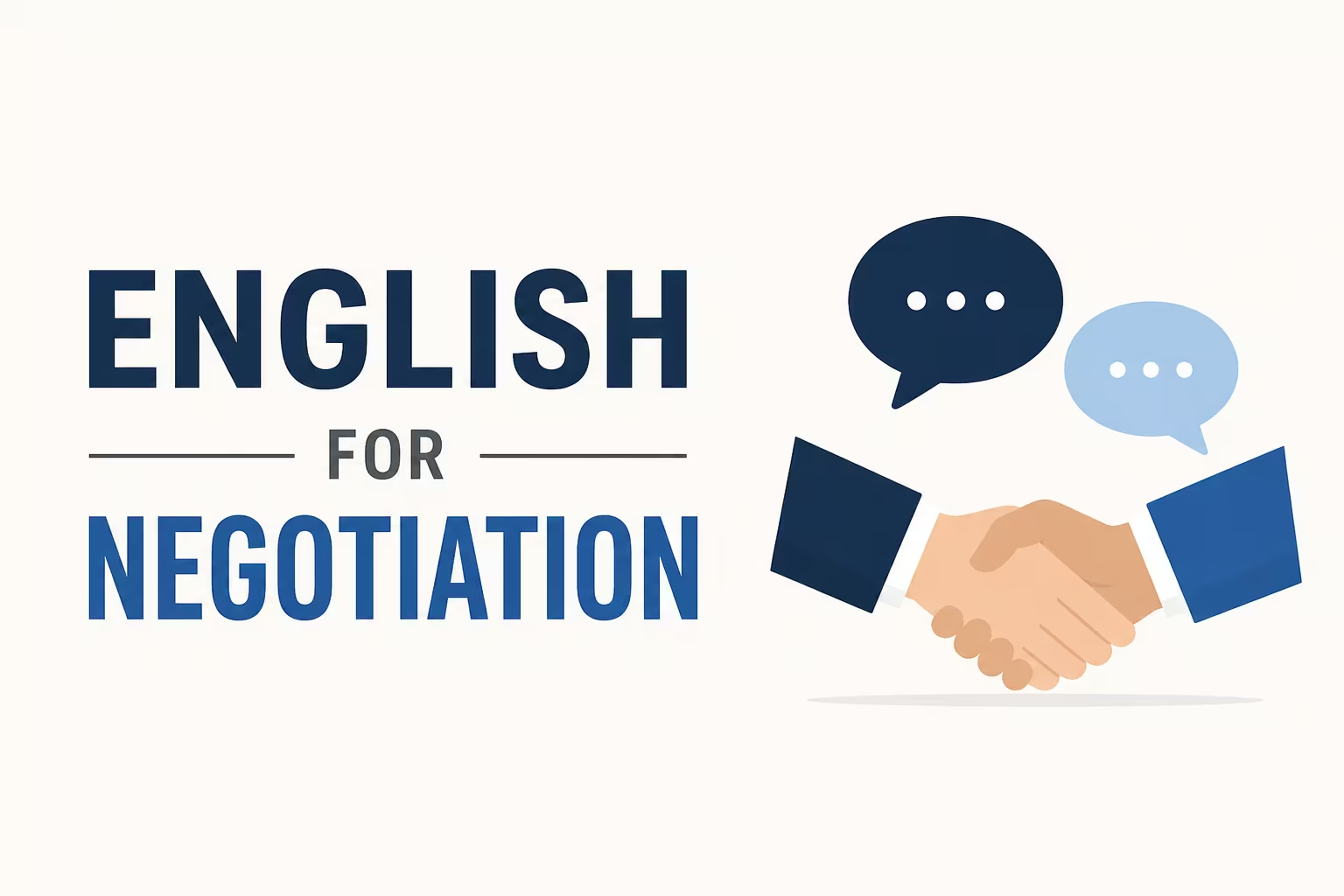
English for negotiation means using specific words and phrases to reach an agreement with another person — politely, clearly, and confidently.
Negotiation happens every day. It is not only for business deals or courtrooms. You negotiate when you:
- Ask for a better price at a market
- Discuss your salary with an employer
- Agree on a deadline with a coworker
- Resolve a conflict with a friend or partner
- Request a discount from a vendor
Good negotiation in English involves listening, speaking clearly, and choosing the right tone. The goal is to find a solution that works for both sides — without sounding rude or aggressive.
Why English for Negotiation Is Important
Here is a simple fact: most global business is done in English. If you want to succeed in an international environment, you need to negotiate effectively in English.
But there is more to it than just business.
It Builds Confidence
When you know what to say, you feel less nervous. You speak more clearly. You listen better. Confidence changes how people see you.
It Helps You Get What You Want
The right phrase at the right time can move a conversation forward. It can turn a “no” into a “maybe” — and a “maybe” into a “yes.”
It Protects Your Interests
Weak or unclear language can hurt you in a negotiation. Strong, polite phrases help you stand your ground without being rude.
It Opens Career Doors
Employers and clients respect professionals who can communicate clearly. Negotiation skills are listed as one of the top soft skills in job markets worldwide.
Core Phrases for English Negotiation (By Stage)
Every negotiation has stages. Learning phrases for each stage makes you prepared for the whole conversation.
Stage 1: Opening the Negotiation
A strong opening sets the right tone. Be polite, clear, and direct.
| Situation | Powerful Phrase |
|---|---|
| Starting the talk | “I’d like to discuss the terms of our agreement.” |
| Stating your goal | “My goal today is to find a solution that works for both of us.” |
| Being collaborative | “I hope we can come to a mutual understanding.” |
| Setting the agenda | “Can we start by going over the key points?” |
Tip: Always start with a positive, respectful tone. It creates goodwill before the negotiation even begins.
Stage 2: Making an Offer or Proposal
When you make an offer, be specific. Vague offers create confusion.
- “We’d like to propose…”
- “Our initial offer is…”
- “Based on our research, we feel that… is a fair price.”
- “We are prepared to offer you… in exchange for…”
- “Here is what we can bring to the table.”
Example:
“Based on market rates, we’d like to propose a starting salary of $55,000. We feel this reflects the experience and skills I bring to the role.”
Stage 3: Responding to an Offer
This is where many ESL learners struggle. How do you say “no” without being rude? How do you buy time to think?
To show interest without committing:
- “That’s an interesting proposal. Let me think about it.”
- “I appreciate the offer. Can I get back to you tomorrow?”
- “That’s a good starting point. I’d like to explore it further.”
To politely decline:
- “I understand your position, but that doesn’t quite work for us.”
- “We’re not able to accept that as it stands.”
- “I’m afraid that’s a little outside our budget.”
To counter an offer:
- “We were actually thinking more along the lines of…”
- “Would you be open to…?”
- “What if we tried a different approach?”
Stage 4: Handling Objections
Objections are not the end. They are part of the process. The key is to acknowledge them and redirect.
Phrases for handling objections:
- “I understand your concern. Here’s how we can address it…”
- “That’s a fair point. Let me offer an alternative.”
- “I hear what you’re saying. What if we…?”
- “I can see why you might feel that way. However…”
- “Could you help me understand your main concern?”
Example:
Client: “Your price is too high.” You: “I understand your concern about the budget. Let me explain what’s included in that price — and then we can look at options that might work better for you.”
Stage 5: Finding Common Ground
This is the heart of negotiation. You want both sides to feel good about the outcome.
Useful phrases:
- “I think we’re closer than we think.”
- “Let’s see where we agree first.”
- “We both want a good outcome here.”
- “Maybe there’s a middle ground we can find.”
- “What would make this work for you?”
Stage 6: Closing the Deal
Don’t leave the conversation open-ended. Close clearly and positively.
Phrases to close a negotiation:
- “I think we’ve reached an agreement.”
- “So we’re both happy with these terms?”
- “Let’s put this in writing so we’re on the same page.”
- “I look forward to working together under these terms.”
- “Shall we finalize the details now?”
Common Mistakes to Avoid in English Negotiation
Even advanced speakers make these mistakes. Avoid them to sound more professional.
❌ Mistake 1: Being Too Direct
In English business culture, being too blunt can seem rude.
- ❌ “That price is wrong.”
- ✅ “We were expecting something a little different.”
❌ Mistake 2: Using Filler Words Under Pressure
Saying “um,” “uh,” or “like” too much makes you seem unsure.
- Practice pausing instead of filling silence.
- Say: “Give me a moment to think about that.”
❌ Mistake 3: Saying “No” Too Quickly
A flat “no” closes doors. A soft “no” keeps them open.
- ❌ “No, we can’t do that.”
- ✅ “That might be difficult, but let’s see what we can do.”
❌ Mistake 4: Not Listening Actively
Negotiation is 50% listening. If you only think about what YOU want to say, you miss important signals.
❌ Mistake 5: Agreeing Too Quickly
Don’t say “yes” just to be polite. It can hurt you later.
- Say: “I appreciate the offer. Let me review the details before we finalize.”
Practical Negotiation Examples in Real Life
Example 1: Salary Negotiation
Situation: Your employer offers you $40,000. You want $48,000.
“Thank you so much for the offer. I’m really excited about this opportunity. Based on my five years of experience and industry research, I was hoping we could discuss a salary closer to $48,000. Is there flexibility there?”
Example 2: Price Negotiation (Shopping or Business)
Situation: A vendor quotes $500 for a product you want.
“I appreciate the quote. We’ve received a few estimates, and we were hoping to stay closer to $400. Is that something you could consider?”
Example 3: Deadline Negotiation at Work
Situation: Your manager gives you a 2-day deadline. You need 4 days.
“I want to make sure I deliver this work at the highest quality. With everything on my plate right now, would it be possible to extend the deadline to Friday? I can have it to you first thing that morning.”
Step-by-Step Tips for Better Negotiation in English
Follow these steps every time you enter a negotiation:
- Prepare your key points — Know what you want and what you’ll accept.
- Research the other side — Understand their needs and limits.
- Start positively — Use friendly, collaborative language.
- Listen more than you speak — Ask questions. Take notes.
- Use “we” language — “We can find a solution” sounds better than “I want.”
- Pause before responding — It shows confidence, not weakness.
- Offer alternatives — Give options, not ultimatums.
- Summarize agreements — Repeat back what was agreed to avoid confusion.
- Stay calm — Keep your voice steady, even if you feel nervous.
- Follow up in writing — Send a summary email after the meeting.
Expert Tips for Negotiating in English
Here are tips from communication experts and professional negotiators:
“Never negotiate alone. Bring data.” Always support your position with facts, market data, or examples. It makes your offer harder to refuse.
“Silence is a tool.” After making an offer, stop talking. Silence creates pressure — and the other side often fills it with concessions.
“The first offer is never the final offer.” Don’t accept the first offer too quickly. There is almost always room to negotiate.
“Name your interest, not your position.” Instead of saying “I want X,” say “The reason this is important to me is…” It creates empathy and opens dialogue.
“Practice out loud.” ESL learners should rehearse negotiation phrases before important meetings. Record yourself. Listen back. Improve.
Quick Reference: Power Phrases at a Glance
| Goal | Phrase |
|---|---|
| Open negotiation | “I’d like to discuss…” |
| Make an offer | “We’d like to propose…” |
| Buy time | “Let me think about that.” |
| Counter an offer | “What if we tried…?” |
| Handle objection | “I understand your concern…” |
| Find middle ground | “Maybe there’s a compromise…” |
| Close the deal | “I think we’ve reached an agreement.” |
| Decline politely | “That doesn’t quite work for us, but…” |
| Show agreement | “That sounds reasonable.” |
| Ask for clarification | “Could you help me understand…?” |
Frequently Asked Questions (FAQs)
Q1: What is the best way to start a negotiation in English?
Start with a friendly, clear opening. Say something like: “I’d like to discuss the terms of our agreement” or “I hope we can find a solution that works for both of us.” Always begin with a positive tone.
Q2: How do I ask for a higher salary in English?
Be polite and back it up with data. Try: “Based on my experience and industry research, I was hoping we could discuss a salary closer to [amount]. Is there flexibility there?”
Q3: What do I say when I don’t agree with an offer?
Avoid saying “no” directly. Instead, say: “That doesn’t quite work for us, but here’s what we can do…” or “We were thinking more along the lines of…”
Q4: How can I sound more confident when negotiating in English?
Speak slowly, pause before responding, and use clear, short sentences. Practicing out loud before important meetings also helps build confidence significantly.
Q5: What phrases help me handle objections?
Try: “I understand your concern — here’s how we can address it,” or “That’s a fair point. Let me offer an alternative.” Always acknowledge the other person’s view before redirecting.
Q6: Is it okay to say “I need to think about it”?
Absolutely. Saying “Let me think about it” or “Can I get back to you tomorrow?” shows professionalism. It is always better than agreeing to something you’re not ready for.
Q7: What is the difference between assertive and aggressive negotiation?
Assertive means stating what you want clearly and respectfully. Aggressive means pushing without considering the other side. Assertive negotiators use phrases like “I feel,” “We’d like,” and “Is there room to…?”
Q8: How do I close a negotiation politely?
Use phrases like: “I think we’ve reached an agreement,” or “Shall we finalize the details now?” Always summarize the agreed terms before ending the conversation.
Q9: What if I don’t understand what the other person said?
It’s perfectly fine to ask for clarification. Say: “Could you help me understand that a little better?” or “I’m sorry, could you repeat that?” Asking questions shows engagement, not weakness.
Q10: How do ESL learners improve negotiation English quickly?
The best way is to practice with real phrases. Role-play with a partner, watch business English videos, and keep a phrase journal. Use the phrases in everyday conversations to build fluency.
Q11: Can I negotiate in English even if my English is not perfect?
Yes! Clear, simple English is better than complicated language full of mistakes. Focus on key phrases, speak slowly, and don’t be afraid to ask for clarification.
Q12: What body language tips help during English negotiations?
Maintain eye contact, nod when listening, keep a relaxed posture, and smile appropriately. Body language supports your words and shows confidence even if you feel nervous inside.
Q13: Are negotiation phrases different in American and British English?
The core phrases are very similar. However, British English often sounds slightly more formal. For example, British speakers might say “I’m afraid that doesn’t work for us” while Americans might say “That doesn’t quite work for us.”
Q14: What tone should I use during a negotiation?
Always stay calm, respectful, and collaborative. Avoid sounding desperate or aggressive. A confident but friendly tone — even in tough moments — keeps the conversation productive.
Q15: Where can I practice negotiation English?
You can practice through business English courses, language exchange apps, YouTube role-play videos, and online speaking clubs. Consistent practice is the fastest path to improvement.
Summary / Key Takeaways
Here is a quick recap of everything you learned:
- ✅ English for negotiation means using the right phrases to reach a respectful agreement.
- ✅ Negotiation happens in everyday life — not just in business.
- ✅ There are six key stages: opening, offering, responding, handling objections, finding common ground, and closing.
- ✅ Always start with a positive, collaborative tone.
- ✅ Avoid saying “no” directly — offer alternatives instead.
- ✅ Silence is powerful — don’t rush to fill it after making an offer.
- ✅ Practice phrases out loud before important meetings.
- ✅ Follow up every negotiation with a written summary.
- ✅ Even imperfect English works — clarity and confidence matter more than perfection.
Conclusion: Start Negotiating in English Today
Mastering English for negotiation is one of the most valuable skills you can develop as an ESL learner or professional. It helps you earn more, communicate better, and build stronger relationships.
The good news? You don’t need to be fluent to negotiate well. You just need the right phrases, a calm mindset, and some practice.
Start small. Use one or two phrases from this guide in your next conversation. Maybe it’s asking for a discount, discussing a deadline, or simply buying yourself time before making a decision.
Every powerful negotiator started exactly where you are right now.
Your next step: Pick 5 phrases from this guide and practice them out loud today. Write them down. Use them this week. Notice how the conversations around you begin to change.
You’ve got this.
Did you find this guide helpful? Explore more practical English guides on our blog — including business email writing, job interview English, and professional vocabulary for the workplace.
You may like these posts:
- Complete Guide to Business English Communication (Emails, Meetings, Calls)
- Business Jargon About Success: Essential English Vocabulary for the Workplace
- English for the Office: 50+ Phrases for Business Encounters
- Professional English Vocabulary for Sales and Business Communication
- Soft Skills for Teachers: The Complete Guide to Becoming a Better Educator
📚 Continue Learning English
Choose your next lesson and keep improving your English skills with our free English learning resources.