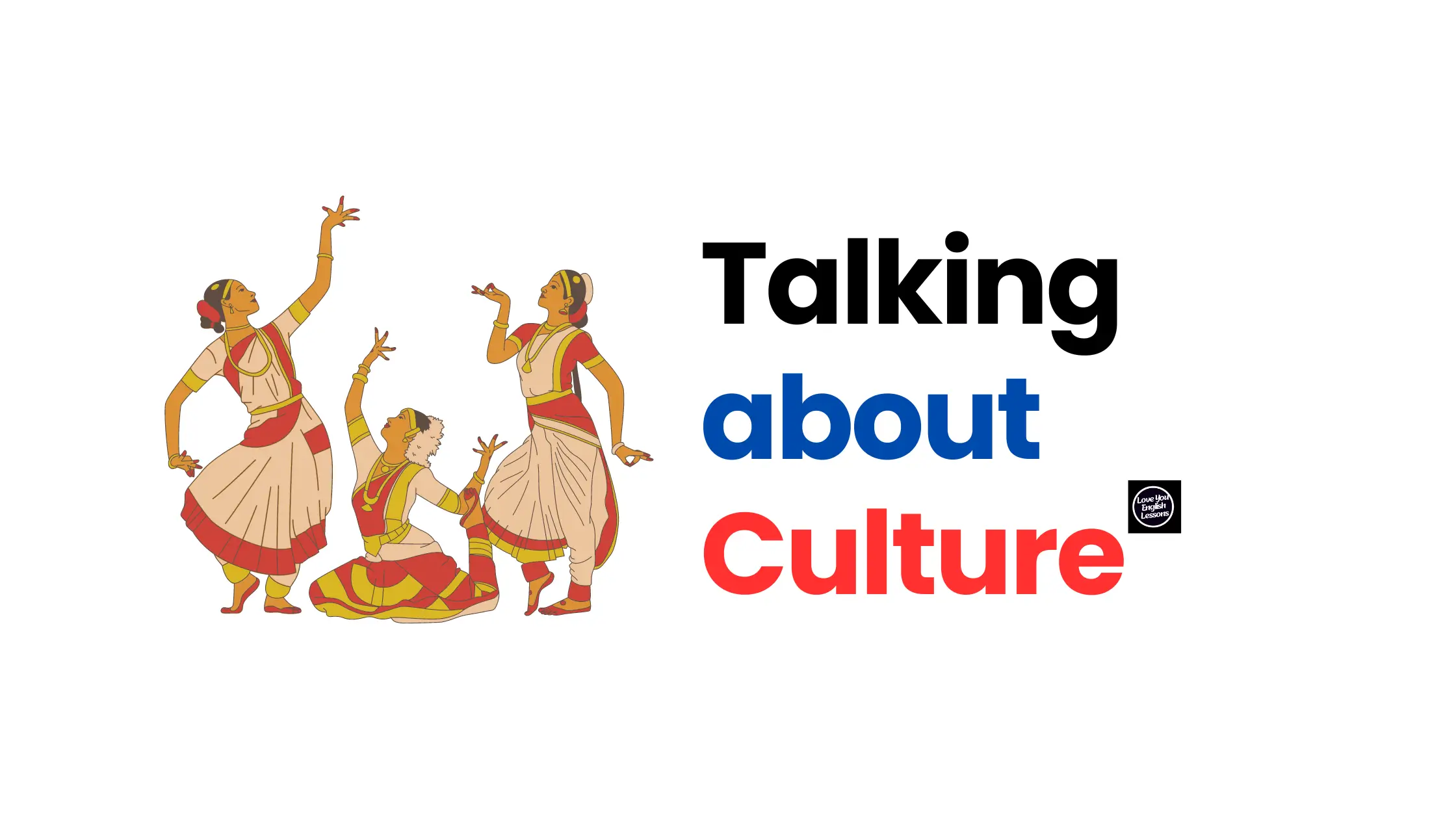
Talking about culture is an important and meaningful part of English communication. Culture comes up often in daily conversations, exams, interviews, travel discussions, classroom topics, and international communication. When you know the right words, you can express ideas about traditions, values, food, festivals, and lifestyles with confidence.
In this topic, you’ll learn how to talk about culture in English using simple, clear, and commonly used vocabulary. These expressions help you describe your own culture, understand other cultures, and compare cultural differences respectfully and naturally.
This lesson will help you:
-
Talk about traditions, customs, and festivals
-
Describe cultural values and beliefs
-
Compare different cultures politely
-
Improve speaking and writing skills for exams and conversations
-
Sound more confident and fluent in discussions
Whether you’re preparing for IELTS/ESL speaking, writing an essay, or having a friendly conversation, cultural vocabulary makes your English richer, clearer, and more global.
What Does “Culture” Mean?
Before we dive into how to talk about culture, let’s clarify what we mean by this word. Culture includes the customs, beliefs, arts, food, language, and way of life that a group of people share. It’s the invisible thread that connects communities and makes each society unique.
When English speakers talk about culture, they might discuss traditions (practices passed down through generations), values (what people consider important), celebrations, food, music, clothing, or social behaviors. Understanding these different aspects helps you join conversations naturally and share your own experiences.
Essential Vocabulary for Cultural Discussions
Building your cultural vocabulary is the first step toward confident conversations. Here are key words and phrases you’ll use regularly:
Basic terms: tradition, custom, heritage, celebration, festival, ceremony, ritual, belief, value, norm
Useful adjectives: traditional, modern, ancient, diverse, unique, multicultural, conservative, progressive
Common phrases: “In my culture, we…”, “It’s customary to…”, “We celebrate by…”, “A typical tradition is…”
Start by memorizing five to ten words from this list each week. Practice using them in simple sentences about your own culture. For example: “In my culture, we celebrate New Year with fireworks and family gatherings.”
How to Describe Your Own Culture
One of the most common situations where you’ll discuss culture is when someone asks, “Tell me about your culture” or “What’s it like in your country?” Here’s a step-by-step approach to answering confidently:
Step 1: Start with a general overview. Give a brief introduction that highlights one or two defining features of your culture. “I’m from Japan, where we value harmony and respect in all relationships.”
Step 2: Share specific examples. Move from general to specific by describing customs, festivals, or daily practices. “For instance, we bow when greeting people instead of shaking hands. The depth of the bow shows the level of respect.”
Step 3: Explain the meaning. Help your listener understand why these customs matter. “This tradition comes from our belief in showing humility and respect to others.”
Step 4: Make comparisons when helpful. If you know your listener’s culture, comparing and contrasting can make your explanation clearer. “Unlike Western countries where people often maintain eye contact, in my culture, avoiding direct eye contact can show respect to elders.”
Remember, you don’t need to be an expert on every aspect of your culture. It’s perfectly fine to say, “That’s a good question, but I’m not sure about the historical reasons. I just know we’ve always done it this way.”
Tips for Beginners: Starting Simple
If you’re new to English, discussing culture might feel overwhelming. The good news is that you can start with very simple sentences and gradually build complexity.
Use the present simple tense. This is your go-to tense for describing customs and traditions. “We eat with chopsticks.” “People wear traditional clothes during festivals.” “Children respect their elders.”
Start with familiar topics. Talk about food first because everyone understands eating! Describe your favorite traditional dishes, when people eat them, and how they’re prepared. Food vocabulary is also relatively easy to learn and remember.
Practice with sentence patterns. Create templates you can reuse: “In [country], people usually…” or “My culture values…” or “During [festival], we…” Fill in the blanks with different information to build fluency.
Don’t worry about perfect grammar. Communication is more important than perfection. If someone is interested in your culture, they’ll understand even if you make small mistakes.
Advanced Strategies for Confident Speakers
Once you’re comfortable with basic cultural discussions, these techniques will help you sound more natural and sophisticated.
Use storytelling. Instead of just listing facts about your culture, tell personal stories. “Last year during Diwali, my grandmother taught me how to make traditional sweets. She learned the recipe from her mother, and now I’m passing it to my daughter.” Stories are memorable and create emotional connections.
Discuss cultural change. Show depth by talking about how culture evolves. “While traditional arranged marriages were common in my grandparents’ generation, today most young people choose their own partners. However, family approval is still very important.”
Express nuance. Avoid overgeneralizing by using phrases like “generally speaking,” “in many families,” “traditionally,” or “it depends on the region.” This shows sophistication and accuracy.
Ask thoughtful questions. Great cultural conversations go both ways. Ask things like “How do you celebrate that in your culture?” or “Is that similar to what people do in your country?” This shows genuine interest and keeps the conversation flowing.
Common Mistakes to Avoid
Even advanced English speakers sometimes struggle when discussing culture. Here are pitfalls to watch out for:
Overgeneralizing. Saying “Everyone in my country does X” can be inaccurate since cultures contain diversity. Use “many people” or “it’s common to” instead.
Using outdated terms. Language around culture changes. If you’re unsure whether a term is respectful or current, it’s better to ask or use more general language.
Assuming knowledge. Don’t assume your listener knows about your festivals, foods, or customs. Provide brief explanations even for things that seem obvious to you.
Being defensive. If someone asks questions about your culture, they’re usually genuinely curious, not criticizing. Stay open and friendly even if questions seem basic or unusual.
Useful Phrases for Every Level
Here are expressions you can use immediately in your conversations:
- “Let me tell you about…”
- “One interesting tradition is…”
- “This might sound strange, but…”
- “The reason behind this is…”
- “Compared to other cultures…”
- “What I love most about my culture is…”
- “Not everyone does this, but many people…”
- “This has changed over the years…”
Practicing Your Cultural English
Knowledge without practice won’t improve your speaking. Try these practical exercises:
Write a cultural profile. In 200 words, describe three important aspects of your culture. Read it aloud daily for a week. You’ll internalize the vocabulary and feel more confident.
Record yourself. Use your phone to record 2-minute explanations of different cultural topics: weddings, holidays, food traditions, family structure. Listen back and notice where you can improve.
Join language exchange groups. Online platforms and local meetups connect you with native English speakers who want to learn about different cultures. This gives you real conversation practice.
Watch cultural content in English. Programs about travel, food, and traditions expose you to how native speakers discuss culture. Pay attention to the phrases and structures they use.
Final Thoughts
Talking about culture in English is one of the most rewarding skills you can develop. It transforms language learning from a classroom exercise into a bridge between people and worlds. You don’t need perfect English to share what makes your culture special. You just need curiosity, preparation, and the willingness to start conversations.
Remember that everyone’s cultural knowledge is valuable. Your unique perspective and experiences are interesting to others, regardless of your English level. Start with simple descriptions, build your vocabulary gradually, and most importantly, enjoy sharing the richness of your heritage with the world.
The more you practice discussing culture, the more natural it becomes. Before long, you’ll find yourself confidently explaining traditions, comparing customs, and asking thoughtful questions about other cultures. That’s when language learning truly comes alive.