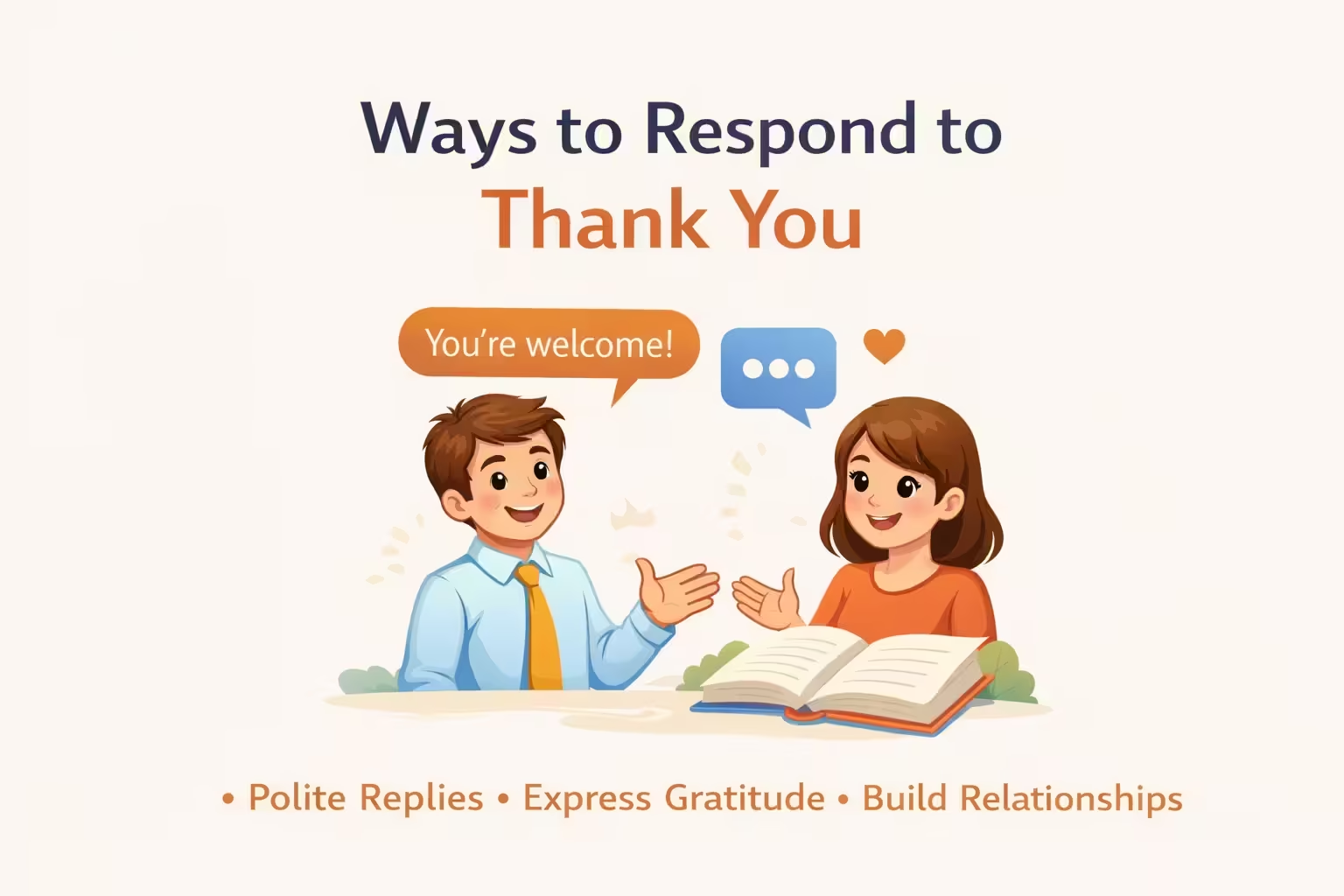
Have you ever been thanked by someone, and suddenly your mind goes blank? You stand there, unsure whether to say “you’re welcome,” “no problem,” or something else entirely. You’re not alone. Knowing how to respond to “thank you” properly is a skill many people struggle with, yet it’s essential for good communication in English.
As an English teacher with years of classroom experience, I’ve watched countless students freeze when someone thanks them. They know they should respond, but they’re uncertain which words to choose. This uncertainty affects their confidence and makes simple conversations feel complicated.
This guide gives you 500 practical ways to respond to “thank you” for every situation you’ll encounter. Whether you’re responding to your boss, a friend, a stranger, or a customer, you’ll find the right words here. More importantly, you’ll understand when and why to use each response.
Why Responding to “Thank You” Matters
When someone thanks you, they’re acknowledging your help or kindness. Your response completes this social exchange. A good response shows respect, builds relationships, and demonstrates your communication skills.
In my teaching experience, students who master these simple exchanges gain confidence quickly. They feel more comfortable in English-speaking environments because they can handle everyday interactions smoothly. This confidence then spreads to other areas of their language learning.
Think of thank-you responses as social glue. They keep conversations flowing naturally and show you understand cultural expectations. Using the right response at the right time makes you sound polite, professional, and fluent.
Understanding Different Types of Responses
Not all thank-you responses work in every situation. The key is matching your response to the context. Let me break this down simply.
Formal responses work best in professional settings, with people you don’t know well, or when showing extra respect. These include responses like “You’re welcome,” “My pleasure,” and “I’m happy to help.”
Casual responses fit friendly conversations, interactions with people you know, and relaxed situations. Examples include “No problem,” “Anytime,” and “Sure thing.”
Warm responses add extra friendliness and work well when you want to strengthen relationships. These include “I’m glad I could help,” “Happy to do it,” and “That’s what friends are for.”
Understanding these categories helps you choose appropriately. Using overly formal language with friends sounds stiff. Using too-casual responses with your boss might seem unprofessional. The context guides your choice.
The Classic Responses (Always Safe)
Let’s start with responses that work almost anywhere. I call these the “safe choices” because you can use them in most situations without worry.
- You’re welcome
- You’re very welcome
- You are most welcome
- You’re quite welcome
- You’re so welcome
- My pleasure
- It’s my pleasure
- The pleasure is mine
- The pleasure is all mine
- Glad to help
These ten responses have stood the test of time. They’re polite, clear, and universally accepted. In my classroom, I always teach these first because they give students a reliable foundation.
“You’re welcome” is the most neutral choice. It works in virtually any English-speaking situation. When my students feel uncertain, I tell them to use this response—it’s never wrong.
“My pleasure” adds a touch of warmth while remaining professional. I use this frequently with students and colleagues because it communicates genuine willingness to help.
Explore more interesting English topics here:
- Vocabulary for Household Chores and Cleaning
- Hansel and Gretel Story for Kids in Simple English
- Business Email Writing in English (US Corporate Style)
- MBA English: Business School Vocabulary and Essays
- The Complete Guide to English Collocations
Professional and Formal Responses
In professional settings, your responses should reflect competence and courtesy. These responses work perfectly in offices, business meetings, client interactions, and formal emails.
- I’m happy to assist
- I’m pleased to help
- It was no trouble at all
- I’m glad I could be of service
- Happy to be of assistance
- I appreciate your kind words
- Thank you for saying so
- It’s part of my job
- I’m here to help
- Always happy to assist
- I’m delighted to help
- It’s what I’m here for
- Consider it done
- I’m at your service
- Pleased to be of service
- I’m glad everything worked out
- Happy I could contribute
- Delighted to be helpful
- I appreciate the opportunity to help
- Thank you for trusting me with this
In professional environments, I’ve learned that these responses do more than acknowledge thanks—they reinforce your professional image. When you respond thoughtfully, colleagues and supervisors notice your communication skills.
For example, “I’m glad I could be of service” sounds more polished than “No problem” in a client meeting. The extra formality shows respect and professionalism.
One challenge teachers often face is helping students understand these subtle differences. I explain it this way: imagine you’re wearing different outfits for different occasions. Your words are like your clothing—you choose based on where you are and who you’re with.
Casual and Friendly Responses
With friends, family, and in relaxed situations, you can be more informal. These responses sound natural and friendly without seeming stiff or overly polite.
- No problem
- No worries
- Don’t mention it
- Don’t worry about it
- Anytime
- Sure thing
- Of course
- Absolutely
- For sure
- No sweat
- It’s nothing
- It’s all good
- All good
- You bet
- You got it
- Happy to
- Glad to
- That’s okay
- No biggie
- Not a problem
- Hey, no problem
- Sure, anytime
- Yeah, of course
- Totally
- Definitely
- It’s cool
- We’re good
- All cool
- Don’t stress
- No stress
These responses feel natural in everyday conversation. They’re the kind of language you hear among friends at coffee shops, in text messages, and during casual chats.
“No problem” has become extremely popular, especially among younger English speakers. It communicates that helping was easy and you were happy to do it. However, some traditional speakers prefer “you’re welcome” in all situations. Understanding your audience helps you choose wisely.
I teach students that casual responses work best when there’s already a friendly relationship. If you’re building a new professional relationship, start formal and relax your language as the relationship develops.
Warm and Heartfelt Responses
Sometimes you want to show extra warmth and sincerity. These responses communicate genuine care and strengthen personal connections.
- I’m so glad I could help
- I’m really happy to help
- It means a lot that you appreciate it
- I’m touched that you noticed
- That’s very kind of you to say
- Your thanks means a lot
- I appreciate you saying that
- It warms my heart to help
- I’m honored to help
- It’s truly my pleasure
- Helping you made my day
- I’m grateful I could assist
- Your gratitude is appreciated
- That’s sweet of you to say
- I’m blessed to help
- It fills my heart to help you
- I care about you and wanted to help
- You deserve all the help I can give
- I’m always here for you
- You’d do the same for me
These responses work beautifully in close relationships. They show emotional investment and deepen bonds between people.
In teaching, I use warm responses with students who are struggling or who’ve made significant progress. “I’m so glad I could help” paired with a smile can encourage a discouraged learner. These small moments of genuine warmth create supportive learning environments.
The key with warm responses is sincerity. Only use them when you genuinely feel that warmth. Forced warmth sounds fake and damages trust rather than building it.
Humble and Modest Responses
Sometimes you want to downplay your contribution or deflect attention. These responses show humility and modesty.
- It was nothing
- It was the least I could do
- Anyone would have done the same
- I didn’t do much
- It was a small thing
- Really, it’s nothing
- Don’t think anything of it
- I barely did anything
- It was simple
- No need to thank me
- I wish I could have done more
- It was easy
- Not worth mentioning
- Just doing what anyone would do
- I was happy to do it
- It’s the least I could offer
- Truly, it was nothing
- Please, think nothing of it
- I only did what was right
- Anyone in my position would help
Humble responses work well in cultures that value modesty. They prevent you from seeming boastful while still acknowledging the thanks.
However, be careful not to overuse these responses. If you constantly say “it was nothing” when you’ve done significant work, people might start believing you. It’s important to accept appreciation gracefully without completely dismissing your efforts.
I teach students to use humble responses occasionally, not habitually. Balance humility with honest acknowledgment of your contributions.
Responses That Acknowledge Effort
When you’ve put in real effort, it’s appropriate to acknowledge this while accepting thanks gracefully.
- I’m glad my effort helped
- I put in the work because I care
- It took some time, but I’m happy it helped
- I wanted to make sure it was done right
- I invested effort because it mattered
- I’m pleased my work was useful
- I worked hard on this for you
- I dedicated time to this because it’s important
- I’m satisfied the effort paid off
- I committed myself to helping you succeed
These responses validate your work while showing you’re pleased with the outcome. They work particularly well in professional mentoring relationships or when you’ve gone above and beyond.
In my teaching practice, when a student thanks me after I’ve spent extra time helping them prepare for an exam, I might say, “I’m glad my effort helped.” This acknowledges the extra time I invested while showing I was happy to do it.
The balance here is crucial—acknowledge your effort without sounding like you’re fishing for more praise.
Collaborative Responses
These responses emphasize teamwork and shared success rather than individual contribution.
- We did this together
- It was a team effort
- We all contributed
- We make a great team
- I couldn’t have done it without you too
- We helped each other
- That’s what teammates do
- We worked well together
- Our collaboration made it happen
- Together we succeeded
- We both played a part
- It was mutual support
- We complement each other well
- Partnership makes things easier
- Two heads are better than one
- We’re stronger together
- That’s the power of working together
- Our combined effort made the difference
- We achieved this as a unit
- Cooperation leads to success
Collaborative responses work wonderfully in team environments, partnerships, and situations where success was genuinely shared. They build group cohesion and recognize everyone’s contributions.
I use these frequently in group teaching situations. When a class completes a difficult project together, responses like “We did this together” reinforce the collaborative learning environment I work to create.
These responses also deflect individual credit when appropriate, which can be culturally important in many contexts.
Future-Oriented Responses
These responses look forward and emphasize ongoing willingness to help.
- I’m here whenever you need me
- Feel free to ask again
- I’ll always help when I can
- You know where to find me
- My door is always open
- Come back anytime you need assistance
- I’ll be here for future questions
- Looking forward to helping again
- I’m available whenever you need
- Don’t hesitate to reach out again
- I’m just a message away
- Call on me anytime
- I’ll always make time for you
- Consider me a resource
- I’m committed to supporting you
- You can count on me going forward
- I’ll continue to be here for you
- Our working relationship is ongoing
- I’m invested in your continued success
- Think of me as a permanent resource
Future-oriented responses are powerful relationship builders. They communicate ongoing commitment and availability, which creates trust and security.
In educational contexts, these responses reassure students that learning is a continuous journey with ongoing support. When a student thanks me for explaining a grammar concept, I might say, “I’m here whenever you need me.” This opens the door for future questions without pressure.
The challenge with these responses is following through. Only offer ongoing help if you genuinely mean it and can deliver on that promise.
Responses Emphasizing Relationship
These responses highlight the personal connection between you and the person thanking you.
- That’s what friends are for
- We look out for each other
- You’d do the same for me
- Friends help friends
- That’s what family does
- We support each other
- You’re important to me
- I value our relationship
- Our friendship means this and more
- You’re worth it
- I care about you
- You matter to me
- That’s what people who care do
- We’re in this together
- You’re special to me
- I treasure our connection
- Our bond is important
- You’ve been there for me too
- Relationships are about mutual support
- We have each other’s backs
These deeply personal responses work in close relationships—family, good friends, long-term colleagues. They acknowledge the emotional connection underlying the interaction.
I’ve found that students appreciate when teachers occasionally use relationship-emphasizing responses. It shows that teaching isn’t just a transaction but involves genuine care for student success. However, maintaining appropriate professional boundaries is essential.
The key is authenticity. These responses sound hollow if the relationship doesn’t actually support them.
Humorous and Lighthearted Responses
In casual, friendly contexts, humor can make thank-you exchanges more enjoyable and memorable.
- Just doing my superhero duties
- It’s all part of my master plan
- I’ll add it to your tab
- You owe me one
- I accept payment in coffee
- My bill is in the mail
- Just saving the world, one favor at a time
- All in a day’s work
- That’ll be a million dollars (joking!)
- I’m secretly building good karma
- Someone’s gotta do it
- I’m collecting good-deed points
- It’s how I get into heaven
- Filing this under “good human stuff”
- Consider it a random act of kindness
- I’m practicing to be a saint
- Just spreading good vibes
- What are friends for if not unpaid labor?
- You’re lucky you caught me in a good mood
- I’m unusually helpful today
Humorous responses add levity and personality to interactions. They work best with people who know you well and understand your sense of humor.
The challenge many ESL learners face is understanding when humor is appropriate. Cultural differences in humor can lead to misunderstandings. I always advise students to observe how native speakers use humor before attempting it themselves.
Humor should enhance the interaction, not confuse or offend. When in doubt, choose a straightforward response instead.
Responses for Minimal Favors
When someone thanks you for something very small, these responses fit the minimal nature of the favor.
- It was tiny
- Seriously, no big deal
- Barely worth mentioning
- Such a small thing
- Really minor
- Tiny favor
- Practically nothing
- Barely lifted a finger
- Easiest thing I did today
- Took no time at all
- Simple as that
- Barely any effort
- Almost automatic
- Second nature to me
- Reflex, really
- Instinctive
- Without thinking
- Natural response
- Muscle memory
- Automatic action
These responses acknowledge the thanks while indicating the action required minimal effort. They prevent the other person from feeling overly indebted for small gestures.
In teaching, I use these when students thank me for quickly answering a simple question. “It was tiny” or “Took no time at all” reassures them they can ask simple questions without burdening me.
The risk is making the other person feel their gratitude was unnecessary. Balance is important—acknowledge their thanks while indicating ease.
Responses for Significant Help
Conversely, when you’ve provided substantial assistance, these responses acknowledge the significance appropriately.
- I’m glad I could make a real difference
- This was important work
- I invested because it mattered
- Significant challenges require committed help
- I’m pleased this major effort succeeded
- Important goals deserve dedicated support
- I’m satisfied we achieved something meaningful
- This was worth the substantial effort
- Making a real impact was my goal
- I’m honored to contribute to something significant
- Meaningful work deserves full commitment
- I’m proud we accomplished this together
- This achievement was worth every moment
- Significant results required significant effort
- I’m fulfilled by this important outcome
- Substantive help for substantive needs
- Major milestones deserve major effort
- I’m gratified this made a real difference
- Transformative help for transformative goals
- This accomplishment merits celebration
These responses validate the significance of what occurred without boasting. They acknowledge reality—substantial help was given and substantial results achieved.
In my teaching career, when students thank me after months of intensive exam preparation that leads to success, responses like “I’m glad I could make a real difference” feel honest and appropriate. The relationship and context support this level of acknowledgment.
The guideline is matching response to reality. Overstating minimal help sounds self-important; understating major help sounds falsely modest.
Cultural and Regional Variations
English is spoken globally, and different regions have preferred responses. Understanding these variations helps you communicate naturally in different contexts.
- Cheers (British/Australian)
- No worries, mate (Australian)
- Right you are (British)
- Not at all (British)
- It’s alright (British)
- Nae bother (Scottish)
- Sound (Irish)
- You’re grand (Irish)
- Sweet as (New Zealand)
- Too easy (Australian)
- Choice (New Zealand)
- Sorted (British)
- No dramas (Australian)
- Bob’s your uncle (British)
- Easy peasy (British/Australian)
- All sorted (British)
- Piece of cake (American/British)
- Child’s play (American/British)
- Simple as (New Zealand)
- She’s right (Australian)
Regional variations add color and authenticity to your English. However, they can confuse listeners unfamiliar with these expressions.
I teach students to understand regional variations for listening comprehension but to initially stick with universal responses when speaking. As they become more advanced and spend time in specific English-speaking regions, they can adopt local expressions naturally.
The joy of these expressions is their cultural richness. “No worries, mate” immediately signals Australian English; “Cheers” is distinctly British. Using them appropriately shows cultural awareness and linguistic flexibility.
Professional Service Industry Responses
People working in customer service, hospitality, healthcare, and similar fields need specific professional responses.
- Thank you for choosing us
- We appreciate your business
- It’s our pleasure to serve you
- We’re here to help
- Serving you is our priority
- We value your trust
- Your satisfaction is our goal
- Thank you for being our customer
- We’re committed to your experience
- Your patronage means everything
- We’re honored to serve you
- Excellence in service is our standard
- Customer care is our mission
- We exist to help people like you
- Your happiness is our success
- We appreciate the opportunity to serve
- Thank you for your confidence in us
- We’re dedicated to your needs
- Serving with excellence is our purpose
- Your trust drives our commitment
These responses reinforce the service relationship while acknowledging thanks professionally. They work in retail, restaurants, hotels, medical offices, and anywhere service is provided.
When I’ve trained customer service professionals in English, I emphasize that these responses do double duty—they acknowledge thanks while subtly marketing the business’s commitment to service quality.
The challenge is sounding genuine rather than robotic. Delivery matters as much as words. A warm tone and sincere smile make standard professional responses feel personal.
Responses After Receiving Compliments
Sometimes “thank you” comes after a compliment rather than a favor. These responses work specifically in that context.
- That’s kind of you to notice
- I appreciate you saying that
- Your words mean a lot
- Thank you for the compliment
- That’s very generous
- I’m flattered you think so
- Coming from you, that means something
- I value your opinion
- Your encouragement helps
- That gives me confidence
- I’m glad it shows
- I work hard at that
- I try my best
- I’m pleased you noticed
- That motivates me to continue
- Your feedback is valuable
- I appreciate your recognition
- That’s encouraging to hear
- I’m honored by your words
- Your perspective matters to me
When someone compliments you and adds thanks, they’re acknowledging both your quality and your action. Responses in this category address both elements.
In teaching, when students thank me and compliment my teaching style, I might say, “I appreciate you saying that—it motivates me to continue.” This acknowledges the compliment while showing their feedback matters.
The balance is accepting the compliment gracefully without excessive modesty or arrogance. A simple, warm acknowledgment works best.
Brief Email and Text Responses
Written communication often requires concise responses. These work perfectly in emails, texts, and messages.
- Welcome!
- Sure!
- NP (no problem)
- Anytime!
- Of course!
- Glad to!
- Happy to!
- 👍 (thumbs up – appropriate in casual digital contexts)
- ✓ (checkmark)
- Got you
- All set
- Done
- Sorted
- No sweat
- Easy
- Always
- Naturally
- Definitely
- Certainly
- Absolutely!
Brief responses work when context is already clear and formality isn’t required. They’re efficient and friendly for digital communication.
I teach students that written and spoken language have different conventions. In face-to-face conversation, “Welcome!” might sound abrupt, but in a text message, it’s perfectly friendly and appropriate.
Understanding medium matters. Email often requires slightly more formality than text messages. Professional emails generally need complete sentences, while texts can be very brief.
Responses That Redirect Credit
When you’ve helped but others contributed too, these responses share credit appropriately.
- I had great help
- The team made it possible
- Others contributed significantly
- I couldn’t have done it alone
- Many people made this happen
- It was collaborative success
- Credit goes to everyone involved
- Others deserve thanks too
- The whole group worked hard
- Success was shared
- Many hands made light work
- Others were instrumental
- I had excellent support
- The team deserves recognition
- Collective effort created this
- Everyone played a vital role
- I’m part of a great team
- Others made crucial contributions
- Shared work, shared success
- Many people enabled this
Redirecting credit shows leadership and generosity. It builds team morale and accurately represents collaborative situations.
In group teaching scenarios, when someone thanks me for the class’s success, I redirect credit to the students: “The students worked hard—credit goes to everyone involved.” This empowers learners and accurately represents their role in their own success.
The challenge is balancing acknowledgment of your contribution with recognition of others. Both can be true simultaneously.
Responses Showing Learning From the Experience
These responses indicate that helping someone taught you something valuable too.
- I learned from this too
- This was educational for me as well
- I gained insight from helping
- We both learned something
- This expanded my understanding
- I grew from this experience
- Teaching this reinforced my knowledge
- I discovered something new too
- This was mutually beneficial
- I’m wiser for having helped
- Explaining this clarified my thinking
- I gained perspective from this
- This challenged me positively
- I developed skills helping you
- We learned together
- This was growth for both of us
- I benefited from this experience
- Helping you taught me something
- I’m grateful for the learning opportunity
- This was enlightening for me too
These responses are particularly powerful in teaching, mentoring, and professional development contexts. They acknowledge that helping others often teaches us as much as we teach them.
As a teacher, I genuinely believe this. When students thank me, I sometimes respond, “We learned together” or “Teaching this reinforced my knowledge.” It’s honest—explaining concepts to students regularly clarifies my own understanding.
This type of response also reduces any power imbalance in the relationship by acknowledging mutual benefit rather than one-way assistance.
Quick Affirmative Responses
Sometimes the simplest responses work best. These ultra-brief options acknowledge thanks efficiently.
- Yep
- Yeah
- Sure
- Okay
- Mhm
- Uh-huh
- Right
- Indeed
- Quite
- Precisely
- Exactly
- True
- Fair
- Cool
- Great
- Good
- Fine
- Alright
- Okey-dokey
- Roger that
These work in very casual contexts or when you’re occupied with something else and can’t give a full response. They acknowledge the thanks without elaborating.
I teach students that context determines whether these are appropriate. In a business meeting, “Yep” might sound too casual, but among friends, it’s perfectly natural.
The risk with ultra-brief responses is seeming dismissive. Tone and body language matter significantly here. A warm “yep” with a smile is friendly; a flat “yep” without eye contact seems rude.
Responses for Ongoing Assistance
When you’re providing continuous support rather than one-time help, these responses fit the ongoing nature of the relationship.
- That’s what I’m here for
- Part of the process
- We’re in this for the long haul
- Ongoing support is what I provide
- This is a journey we’re on together
- Continuous assistance is my commitment
- We’ll keep working through this
- Long-term support is what you need
- This is marathon, not a sprint
- Sustained help is available
- We’re building something over time
- Consistent support continues
- This is part of our ongoing work
- Regular assistance is what I offer
- We’re developing this progressively
- Continuous improvement is our goal
- Steady support remains available
- This is incremental progress
- Ongoing partnership is valuable
- Sustained effort brings results
These responses set expectations for continued interaction and support. They’re perfect for coaching, long-term projects, therapeutic relationships, and extended learning situations.
In teaching language skills, which require sustained effort over months or years, I use these responses frequently. “We’re in this for the long haul” reminds students that language learning is gradual and I’ll support them throughout the journey.
The benefit is managing expectations while affirming commitment. Progress rarely happens instantly, and these responses acknowledge that reality.
Enthusiastic Responses
Sometimes extra enthusiasm fits the situation. These responses convey genuine excitement about helping.
- I’m so happy I could help!
- This made my day!
- I was thrilled to assist!
- What a joy to help!
- I’m excited this worked out!
- This was wonderful!
- I loved helping with this!
- What a pleasure this was!
- I’m genuinely delighted!
- This brings me real joy!
- I’m so pleased!
- What a great outcome!
- I’m truly excited about this!
- This is fantastic!
- I’m over the moon I could help!
- What a rewarding experience!
- I’m absolutely pleased!
- This is exactly what I hoped for!
- I couldn’t be happier to help!
- What wonderful results!
Enthusiastic responses work when you’re genuinely excited about the outcome or when encouragement will benefit the other person significantly.
With students who’ve struggled and finally achieved success, enthusiastic responses celebrate their achievement and reinforce positive feelings about learning. “I’m so happy I could help!” with genuine warmth creates memorable positive associations.
The warning is authenticity. Fake enthusiasm is transparent and damages trust. Only use enthusiastic responses when you truly feel that excitement.
Formal Written Responses
Business correspondence and formal writing require specific response styles.
- Your acknowledgment is appreciated
- Please know it was my pleasure
- I am pleased to have been of assistance
- Your recognition is valued
- I appreciate your gracious words
- It was an honor to be of service
- Your gratitude is noted with appreciation
- I am gratified to have helped
- Please do not hesitate to contact me again
- I remain at your disposal
- Your kind words are much appreciated
- I am pleased our efforts were successful
- Your satisfaction is most gratifying
- I trust this met your expectations
- Please feel free to reach out again
- I am happy to have exceeded expectations
- Your positive feedback is valued
- I appreciate your professional courtesy
- It was my distinct pleasure
- I look forward to future collaboration
These formal responses work in business letters, professional emails, academic correspondence, and situations requiring traditional formality.
The challenge many students face is sounding natural while maintaining formality. I explain that formal English follows specific patterns that may feel stiff initially but are expected in certain contexts.
Think of formal responses as professional attire for your words—appropriate for specific situations even if you wouldn’t wear them everywhere.
Responses Acknowledging Mutual Benefit
These highlight win-win outcomes where both parties benefited.
- This was good for both of us
- We both came out ahead
- Mutual benefit makes me happy
- Win-win situations are the best
- We both gained something
- This worked out for everyone
- Everybody benefits—that’s ideal
- I’m glad we both got something from this
- Reciprocal value is wonderful
- Shared benefit is the goal
- We both win here
- This served both our interests
- Mutual advantage is satisfying
- We helped each other
- This was reciprocally beneficial
- Both of us are better off
- Shared success is real success
- We elevated each other
- Mutual growth happened here
- This enriched both of us
Acknowledging mutual benefit is honest and relationship-building. It shows you don’t see yourself as superior or as doing charity, but as engaged in genuine exchange.
In professional collaborations, these responses build equality and partnership. “We both gained something” acknowledges that helping someone often brings value back to the helper too.
This perspective shift—from one-way assistance to mutual benefit—often makes people more comfortable both giving and receiving help.
The Final 50: Mixed Practical Responses
To complete our list of 500, here are 50 more practical responses covering various situations:
- I was glad to step in
- Timing worked out perfectly
- It aligned with my values
- I believe in helping when possible
- Seemed like the right thing
- I’d want someone to do the same for me
- Pay it forward, right?
- We all need help sometimes
- Today you, tomorrow me
- That’s how communities work
- It’s what compassionate people do
- Kindness should be normal
- I’m able, so I help
- Resources are for sharing
- Knowledge grows when shared
- Skills are meant to be used
- Generosity enriches everyone
- Helping is its own reward
- Good deeds create good feelings
- I’m fortunate to be able to help
- Privilege includes responsibility
- Capability implies duty
- I have what you needed
- The universe provides
- Everything happens for a reason
- Meant to be helpful
- Destiny aligned us
- Fortunate circumstances enabled this
- Right place, right time
- Stars aligned for this
- Serendipity worked in our favor
- Lucky I could help
- Grateful for the opportunity
- Blessed to assist
- Thankful I was available
- Appreciative of the chance to help
- Honored by the opportunity
- Privileged to contribute
- Fortunate to be useful
- Happy circumstances allowed this
- Glad the situation permitted help
- Thankful timing worked out
- Pleased I had the resources
- Satisfied I had the knowledge
- Content I could contribute
- Fulfilled by helping
- Rewarded by your success
- Gratified by the outcome
- Pleased with the result
- Happy to see you succeed
How to Choose the Right Response
With 500 options, selection might seem overwhelming. Here’s my simple framework for choosing appropriately:
Consider the relationship. Close friends accept casual responses; new professional contacts require formal ones. The relationship determines your baseline formality level.
Assess the context. Workplace? Professional responses. Casual gathering? Friendly responses. Email? Consider appropriate written forms. Context shapes your choice within the relationship baseline.
Evaluate the favor’s significance. Major help deserves acknowledgment of that significance; minor assistance can be minimized. Match response weight to favor weight.
Check cultural expectations. Different cultures have different norms around accepting thanks. When uncertain, lean slightly formal and observe how native speakers respond.
Be authentic. Choose responses that feel natural to you. Forced language sounds awkward. Within appropriate options, pick what fits your personality.
Practice variety. Don’t use the exact same response every time. Variety sounds more natural and engaged.
Common Mistakes to Avoid
Through years of teaching, I’ve noticed common errors that diminish the effectiveness of thank-you responses.
Over-apologizing. Saying “I’m sorry it wasn’t better” when someone thanks you undermines your contribution. Accept thanks graciously without apologizing for imagined shortcomings.
Dismissing completely. While humility is valuable, constantly saying “it was absolutely nothing” when you’ve clearly helped makes you seem falsely modest or fishing for more compliments.
Being too casual in formal settings. “No prob, dude” doesn’t fit a business presentation. Match formality to context.
Being too formal in casual settings. “The pleasure was entirely mine” sounds stiff when a friend thanks you for