Introduction: Why Body Movement Vocabulary Matters in English
If you have ever watched an English movie and wondered, “What does it mean when someone shrugs their shoulders?” or “Why did the teacher say the student fidgeted in class?” — you are not alone.
ESL vocabulary words for body movements are one of the most overlooked areas in English learning. Most textbooks teach you colors, numbers, and food words. Very few spend enough time on the rich vocabulary English uses to describe how people move their bodies.
But here is the truth: body movement words are everywhere in English. You find them in novels, news articles, workplace conversations, movies, and everyday speech. When you know these words, your reading improves, your listening improves, and your speaking becomes far more expressive and natural.
I have been teaching English for over 10 years — in physical classrooms across South Asia and in online sessions with students from more than 20 countries. Again and again, I see the same gap: students know grammar rules but struggle to describe simple actions. This guide will fix that.
By the end of this article, you will have a strong vocabulary of English body movement words, understand how to use them correctly, and have practical exercises to practice right away.
What Are Body Movement Vocabulary Words in English?
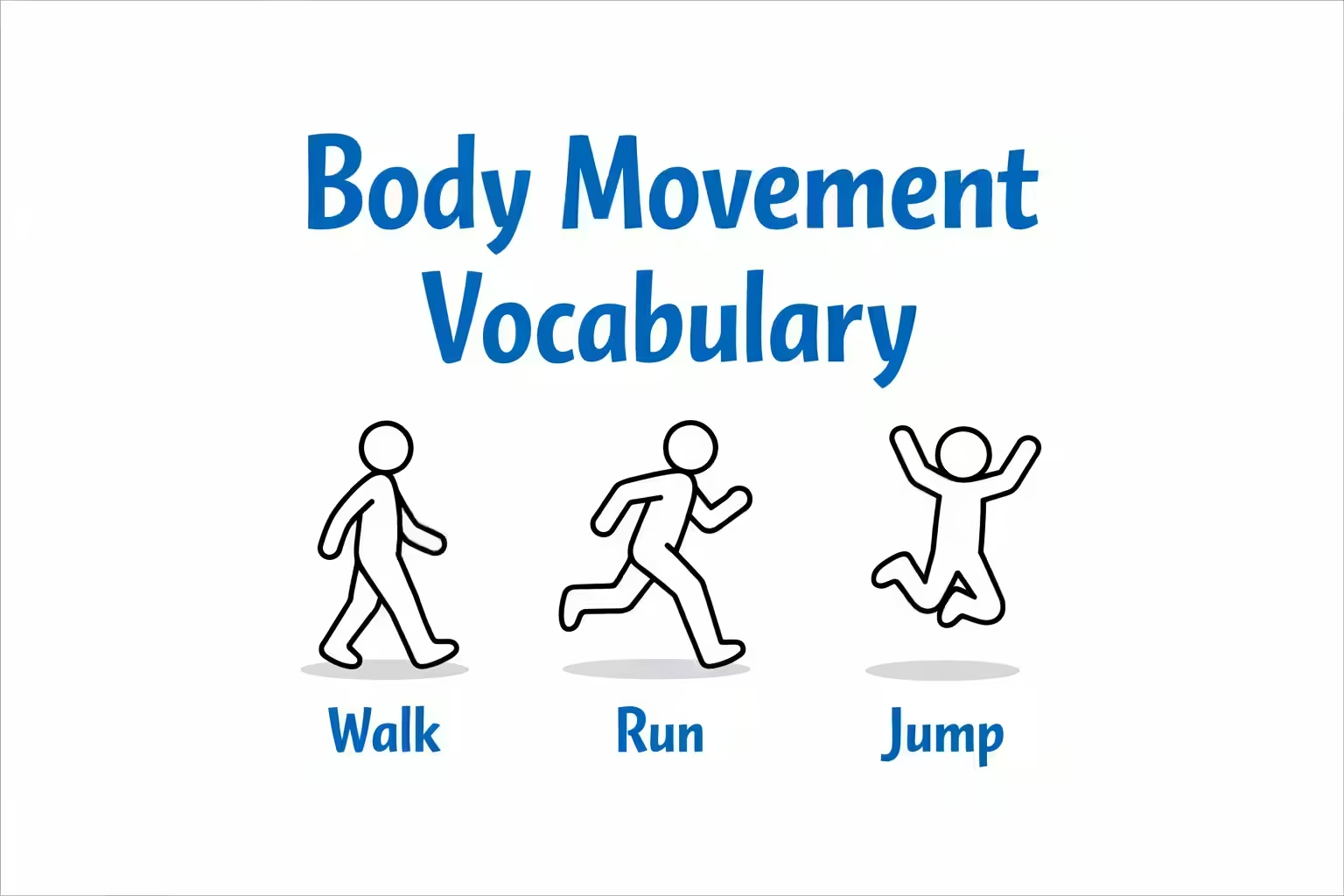
Body movement vocabulary refers to all the words in English that describe how a person moves a specific part of their body. These are not just basic words like “walk” or “run.” English has dozens of precise, expressive words for body movements — each one painting a slightly different picture.
For example, compare these sentences:
- She walked into the room.
- She strutted into the room.
- She shuffled into the room.
- She crept into the room.
All four sentences describe someone entering a room. But each word tells a completely different story about how she moved, and even what kind of person she might be or how she was feeling.
This is the power of body movement vocabulary in English. It gives you precision and expressiveness.
Core ESL Vocabulary Words for Body Movements (By Body Part)
Let us organize these words by body part. This makes them easier to learn and remember.
Head and Face Movements
Nod – to move your head up and down to say yes or show agreement. “She nodded when the teacher asked if she understood.”
Shake your head – to move your head from side to side to say no or show disagreement. “He shook his head when he heard the bad news.”
Tilt your head – to lean your head slightly to one side, often showing curiosity or confusion. “The dog tilted its head when it heard the strange sound.”
Squint – to partly close your eyes, usually because of bright light or to see something better. “She squinted at the small text on the board.”
Wink – to close and open one eye quickly, usually to be playful or show a secret. “He winked at his friend across the room.”
Blink – to close and open both eyes quickly. “She blinked in surprise when she heard the news.”
Frown – to pull your eyebrows together and down, showing worry, confusion, or unhappiness. “He frowned when he read the confusing question.”
Raise your eyebrows – to move your eyebrows upward, showing surprise or disbelief. “She raised her eyebrows when she saw the price.”
Shoulder and Arm Movements
Shrug – to raise both shoulders briefly and then lower them, showing you do not know or do not care. “When I asked him where my book was, he just shrugged.”
This is one of the most common words in everyday English — and one most ESL students do not know until I teach it. In a survey I did with my own students, fewer than 30% knew the word shrug before we covered body movement vocabulary. After one lesson, they started noticing it everywhere.
Wave – to move your hand from side to side to greet someone or get attention. “She waved at me from across the street.”
Point – to extend your finger toward something or someone. “He pointed at the door and told me to leave.”
Fold your arms / Cross your arms – to put your arms across your chest, often showing you are closed off or unhappy. “She folded her arms and refused to speak.”
Stretch – to extend your arms (or body) outward, often to relieve stiffness. “He stretched his arms above his head after sitting for hours.”
Reach – to extend your arm toward something. “She reached for the top shelf but couldn’t get to it.”
Explore more interesting topics here:
- Classroom Activities to Improve Student Vocabulary and Memory
- 150 Words Starting with “O” – Expand Your English Vocabulary
- Fitness and Gym Vocabulary in English
- MBA English: Business School Vocabulary and Essays
- English Vocabulary for Weather Disasters and Climate Change
Hand and Finger Movements
Clap – to hit your palms together repeatedly, usually to show appreciation. “The audience clapped at the end of the performance.”
Snap – to make a sharp clicking sound by pressing your middle finger against your thumb and releasing it quickly. “She snapped her fingers to get the waiter’s attention.”
Tap – to hit something lightly and repeatedly with your finger or hand. “He tapped his fingers on the desk while waiting.”
Grip – to hold something tightly. “She gripped her bag when she walked through the crowd.”
Fidget – to keep making small, restless movements, usually because you are bored or nervous. “The student kept fidgeting with his pen during the exam.”
This is another word my students love once they learn it. I often tell them: “You fidget in my class when you are bored. Now you have a word for it.” That gets a laugh — and they never forget the word.
Body and Torso Movements
Lean – to move your body weight in one direction. “She leaned forward to hear better.”
Slouch – to sit or stand in a lazy, drooping way. “Stop slouching! Sit up straight.”
Crouch – to lower your body by bending your knees deeply, keeping your back mostly straight. “He crouched down to speak to the child at eye level.”
Squat – similar to crouch, but lower — sitting on your heels close to the ground. “She squatted down to pick up the coin.”
Bow – to bend your upper body forward as a sign of respect. “The performer bowed at the end of the show.”
Hunch – to raise your shoulders and bend your upper back forward. “He hunched over his laptop for hours.”
Leg and Feet Movements
Stomp – to walk or step heavily, making loud sounds. “She stomped out of the room in anger.”
Tiptoe – to walk quietly on your toes to avoid making noise. “He tiptoed past the sleeping baby.”
Pace – to walk back and forth in one small area, usually because you are anxious or thinking. “She paced around the room waiting for the phone call.”
Limp – to walk with difficulty because of an injury or pain in the leg or foot. “He limped to the medical room after hurting his ankle.”
Shuffle – to walk slowly without properly lifting your feet. “The tired old man shuffled down the hallway.”
Skip – to move forward with a light, bouncing step, lifting alternate feet. “The children skipped happily across the playground.”
Common Mistakes ESL Students Make With Body Movement Words
Over the years, I have noticed a few patterns in the errors students make. Here are the most common ones — and how to fix them.
Mistake 1: Using “move” for everything
Many learners default to the word move when they do not know the specific word. “He moved his head.” “She moved her hand.” These sentences are not wrong, but they are vague. Push yourself to find the specific word. Did he nod or did he shake his head? Did she wave or did she point?
Mistake 2: Confusing shrug and shake
Students sometimes say “he shrugged his head” — which is not correct. You shrug your shoulders. You shake your head. These phrases are fixed in English.
Mistake 3: Forgetting body part collocations
In English, many body movement words go with specific body parts. You raise your eyebrows, not lift them (though lift is sometimes used informally). You fold your arms, not cross your hands. Learning these as fixed phrases is more effective than learning the words alone.
Mistake 4: Overusing nod to mean yes
While nod does mean a head movement that signals agreement, students sometimes use it in writing in places it does not fit. “She nodded that she would come.” — This does not sound natural. Better: “She nodded in agreement” or simply “She said yes.”
Practice Activities to Learn Body Movement Vocabulary
Learning vocabulary is one thing. Using it confidently is another. Here are some activities I use in my own classes that work extremely well.
Activity 1: Mime and Guess
One student acts out a body movement without speaking. The rest of the class guesses the word. This is incredibly effective for both online and offline classes. When students physically act out words like slouch, stomp, or tiptoe, they remember them far longer.
Activity 2: Sentence Completion
Give students a sentence with a blank and a choice of two body movement words. For example: “She ______ her shoulders when asked about the missing money.” (shrugged / nodded)
This trains them to think about meaning and context, not just memorize definitions.
Activity 3: Story Retelling With Body Words
Tell students to retell a simple story but use at least five body movement words. For example: “Describe your morning routine using movement vocabulary.” Students often say things like: “I shuffled to the bathroom, squinted at the bright light, and stretched before getting dressed.” This activity builds fluency and creativity together.
Activity 4: Watch and Describe
Play a short video clip with the sound off — a scene from a movie or a simple animation. Ask students to describe what they see using body movement vocabulary. This improves both vocabulary and listening/observation skills.
Why Learning These Words Builds Confidence and Fluency
There is a reason experienced English learners and teachers keep coming back to vocabulary as the foundation of fluency. When you have the right word, you feel more confident using it. When you do not have the word, you pause, translate in your head, and speak slowly.
Body movement vocabulary words give you the tools to describe human behavior vividly and accurately. This matters in many real-life situations:
- Writing emails or reports where you describe someone’s reaction
- Reading English novels or subtitles where these words appear constantly
- Having natural conversations where body language comes up
- Job interviews where you describe behavior and interactions
- Storytelling in English, which requires descriptive action words
The students I have seen improve fastest are the ones who go beyond basic vocabulary and push into expressive, descriptive language. Body movement words are a fantastic stepping stone into that level of English.
How Teachers Can Use Body Movement Vocabulary in the Classroom
If you are a teacher reading this, here are some ways to incorporate this vocabulary naturally into your lessons.
Warm-up exercises: Start class with a quick mime game. Students instantly engage and the vocabulary sticks.
Reading comprehension: Choose texts that contain rich body movement vocabulary — short stories work well. Ask students to underline and define all movement words.
Role play: Create scenarios where body language matters. An interview, a difficult conversation, a surprise party — students describe actions using movement vocabulary.
Error correction journals: Ask students to keep a notebook where they correct their own overuse of generic words like “move” and replace them with specific body movement vocabulary.
Consistent, low-pressure exposure is the key. You do not need to dedicate an entire lesson to this topic. Weave it in regularly and students will internalize these words naturally over time.
Conclusion: Start Using ESL Vocabulary Words for Body Movements Today
ESL vocabulary words for body movements open up a whole new level of English expression. They help you read more clearly, write more vividly, and speak more naturally. From a simple shrug to an expressive strut, these words carry meaning that basic vocabulary simply cannot match.
The key takeaways from this guide are simple. Learn body movement words by body part so you can organize and remember them better. Practice using them in real sentences and activities, not just in word lists. Be aware of common mistakes like using vague words instead of specific ones. And above all, practice consistently — a few new words each week, used in real contexts, will transform your English over time.
Progress takes time. But with the right vocabulary tools and regular practice, you will be describing the world around you in rich, expressive English sooner than you think.
FAQs: ESL Vocabulary Words for Body Movements
Q1: How many body movement words should I learn at one time?
Focus on 5 to 10 words per week. Learn them in context — through sentences and examples — rather than in isolated word lists. Review them regularly and use them in speaking or writing practice.
Q2: What is the best way to remember body movement vocabulary?
Physical mime activities work best for most learners. When you physically act out the word shuffle or tiptoe, your brain stores the memory more effectively than if you simply read the definition.
Q3: Are these words used in formal and informal English?
Most body movement words work in both formal and informal English. Words like nod, gesture, and bow are perfectly appropriate in professional writing. Words like fidget or stomp tend to appear more in informal speech and storytelling.
Q4: Where can I find these words used naturally?
Read short stories, watch English-language films with subtitles, or read news articles about sports and performance. These sources are full of vivid body movement vocabulary used naturally by native speakers.
Q5: How do body movement words help with spoken English?
They give you more precise language to describe situations, tell stories, and explain events. When you can say “she shrugged and walked away” instead of “she moved and went away,” your spoken English sounds much more fluent and natural to native listeners.
Related topic: Build Your Word Power: The Ultimate Guide to English Vocabulary for Beginners and Advanced Learners
Want to learn more? Visit our English Vocabulary for similar topics.
📚 Continue Learning English
Choose your next lesson and keep improving your English skills with our free English learning resources.