1. Introduction
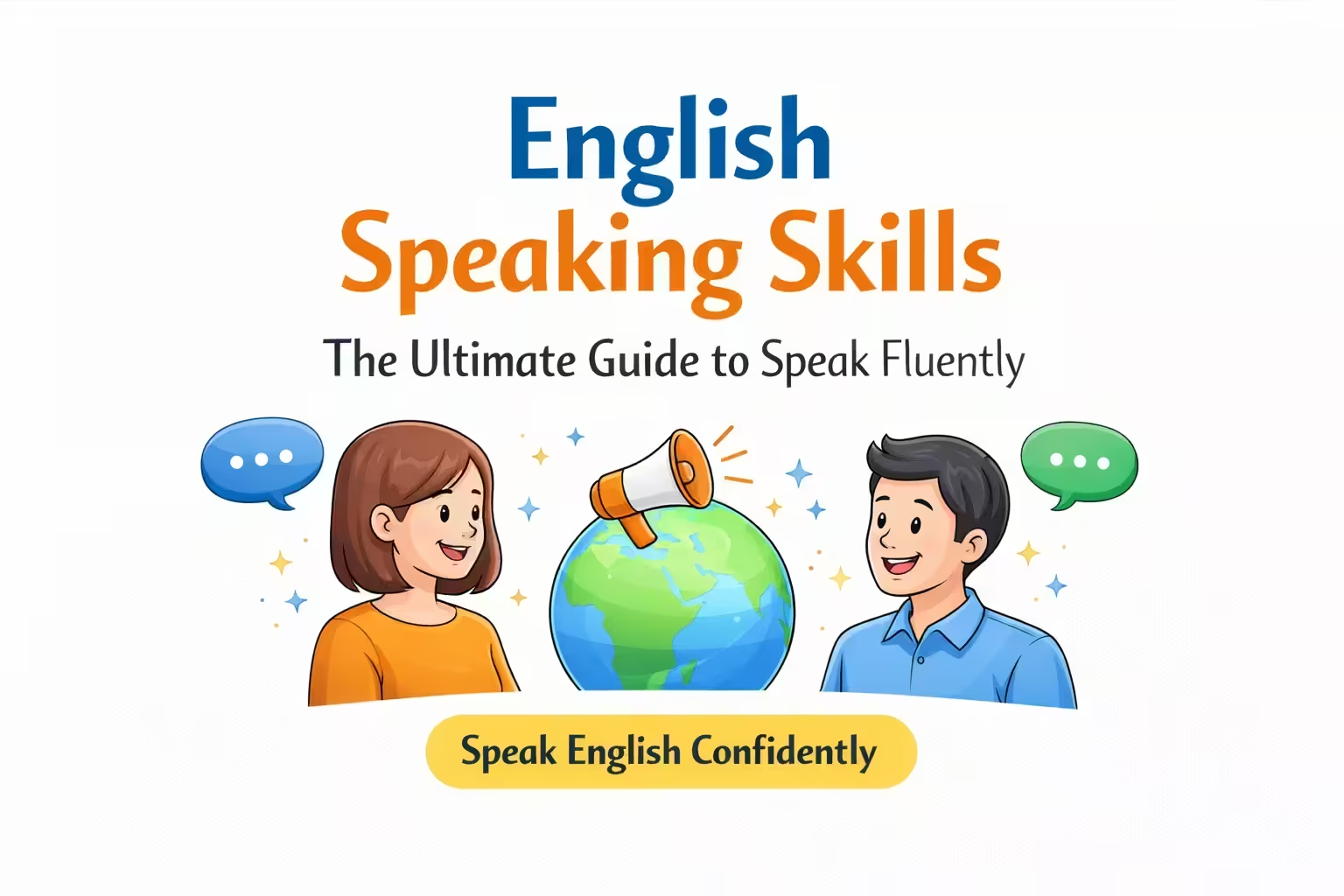
Do you want to speak English fluently but feel nervous or stuck? You are not alone. Millions of people around the world are learning English every day. Whether you are a student, a working professional, or someone who simply wants to communicate better, improving your English speaking skills is one of the most powerful things you can do for your future.
English is the global language of business, education, travel, and technology. When you speak English with confidence, doors open. You get better jobs, make new friends, and connect with people from different cultures. This ultimate guide to English speaking skills will walk you through everything you need to know — from the basics to advanced techniques — in a simple, friendly, and easy-to-understand way.
Let us begin this journey together.
2. What Are English Speaking Skills?
English speaking skills refer to your ability to communicate effectively in the English language using spoken words. It is not just about knowing grammar rules or memorizing vocabulary. True speaking skill means you can express your thoughts clearly, respond naturally in conversations, and be understood by others without confusion.
Speaking skills in English include several connected abilities:
- Pronouncing words correctly so others understand you
- Using the right words at the right time
- Speaking at a comfortable and natural speed
- Understanding what others say and responding well
- Feeling confident while speaking
In simple terms, English speaking skills are the tools you use to have real, meaningful conversations in English. They are built over time through practice, patience, and the right learning strategies.
3. Why Are English Speaking Skills Important?
Good English speaking skills can completely change your life. Here is why they matter so much:
Career Growth Most multinational companies require employees who can speak English. Job interviews, meetings, presentations, and emails — all of these depend on clear English communication. Candidates who speak English confidently often get better jobs and higher salaries.
Education and Academic Success Many of the world’s top universities teach in English. Students who can speak and understand English fluently have access to better academic resources, scholarships, and international study programs.
Travel and Cultural Connection English is spoken in over 100 countries. When you travel, English helps you ask for directions, book hotels, meet new people, and enjoy your experience more fully. It is truly the language of the world.
Self-Confidence and Personal Growth When you can express yourself clearly in English, you feel more confident in social situations. You stop avoiding conversations and start enjoying them. This confidence spreads into other areas of your life too.
Access to Information Most of the content on the internet — articles, videos, research papers, online courses — is in English. Speaking and understanding English gives you access to a huge world of knowledge.
4. Types of English Speaking Skills
English speaking skills are not just one thing. They are made up of several different types, each equally important. Let us look at the main categories:
A. Pronunciation Skills
Pronunciation is how you say words. Good pronunciation means the sounds you make are clear and easy to understand. Poor pronunciation can cause misunderstandings even if your grammar is perfect.
B. Fluency Skills
Fluency means speaking smoothly and naturally, without too many long pauses or interruptions. A fluent speaker does not stop after every word to think. The ideas flow naturally from one to the next.
C. Vocabulary Skills
Vocabulary is the bank of words you know and use. A strong vocabulary allows you to express your thoughts more clearly and precisely. Without enough words, you may know what you want to say but not how to say it.
D. Grammar and Sentence Structure Skills
Grammar gives your speech its structure. When your grammar is correct, people understand you more easily. However, for spoken English, perfect grammar is less important than being clear and natural.
E. Listening and Response Skills
Speaking is not a one-way activity. Good speakers are also good listeners. The ability to understand what someone says and respond appropriately is a key part of speaking skills.
F. Conversational Skills
These include knowing how to start a conversation, keep it going, change topics politely, and end it naturally. Conversational skills also include small talk, storytelling, and expressing opinions.
G. Public Speaking Skills
Public speaking means talking to a group of people. This could be a classroom presentation, a work meeting, or a speech at an event. It requires confidence, clarity, and the ability to organize your thoughts.
5. Detailed Explanation with Examples
Now let us go deeper into each skill with simple explanations and everyday examples.
Pronunciation — Saying It Right
Pronunciation problems are very common for English learners. For example, many learners confuse the sounds of “v” and “w.” They might say “wery” instead of “very” or “wine” instead of “vine.”
The best way to improve pronunciation is to listen carefully to native speakers and repeat what they say. Watch English movies, TV shows, or YouTube videos and pay attention to how words are spoken. You can also use apps like Forvo or Google Translate to hear the correct pronunciation of any word.
Example:
- Wrong: “I am wery happy.”
- Right: “I am very happy.”
A simple tip: Record yourself speaking and compare it to native speakers. You will quickly notice the differences.
Fluency — Speaking Without Stopping
Fluency does not mean speaking fast. It means speaking smoothly. Many learners make the mistake of trying to translate every word from their mother tongue before speaking in English. This slows them down and makes speech sound unnatural.
Instead, practice thinking in English. Start with simple sentences about your daily routine. For example:
- “I woke up at 7 in the morning.”
- “I had tea and bread for breakfast.”
- “I took the bus to work.”
The more you practice speaking in English — even to yourself — the more natural and fluent you become.
Vocabulary — Choosing the Right Words
Vocabulary builds over time. You cannot learn all words at once. The best approach is to learn words in context — that means learning how a word is used in a sentence, not just its meaning.
For example, the word “run” has many meanings:
- “I run every morning.” (exercise)
- “The company runs smoothly.” (operates)
- “Can you run a check on this?” (perform)
Try to learn 5 to 10 new words every day. Use them in sentences. Write them down. Review them the next day.
Related post “Most Common English Words for Beginners“.
Listening and Responding — The Two-Way Street
Many learners focus only on speaking, but listening is equally important. When you listen carefully, you catch new words, understand different accents, and know when and how to respond.
Practice active listening. This means:
- Looking at the person who is speaking
- Nodding or saying “I see,” “Right,” or “Okay” to show you are listening
- Asking questions if you do not understand something
For example, if someone says something unclear, you can respond with:
- “Sorry, could you say that again please?”
- “I am not sure I understood. Do you mean…?”
These phrases show respect and keep the conversation going.
Conversational Skills — Making Real Connections
Conversation is not just exchanging information. It is about building a relationship. Good conversational skills include knowing how to open and close a conversation, how to change a topic politely, and how to show interest in the other person.
Example of a natural conversation opener:
- “Hi! Nice to meet you. Where are you from?”
- “I’ve been thinking about visiting your city. What do you love most about it?”
Example of politely changing a topic:
- “That’s interesting! By the way, did you hear about…?”
These small phrases make your speaking sound natural and warm.
Public Speaking — Talking to a Crowd
Public speaking is one of the most feared activities in the world — even for native English speakers! But it is a skill you can learn with practice.
Key elements of good public speaking:
- Start with a strong, attention-grabbing sentence
- Organize your ideas clearly with a beginning, middle, and end
- Speak slowly and clearly
- Make eye contact with your audience
- Use pauses for emphasis
Example: Instead of saying everything fast and nervously, pause after a key point. Let the audience absorb what you said. This makes you sound more confident and authoritative.
Related post: “How to Overcome Fear of Public Speaking in English“
6. Common Mistakes Learners Make
Even motivated learners make some very common mistakes. Knowing what these are helps you avoid them.
Mistake 1: Waiting Until You Are “Ready”
Many learners wait until their English is “perfect” before speaking. But this moment never comes. The truth is, you improve by speaking, not by waiting.
Mistake 2: Translating from Your Native Language
Thinking in your mother tongue and translating every sentence into English slows you down and produces unnatural sentences. Try to think directly in English, even if it is just simple thoughts at first.
Mistake 3: Focusing Only on Grammar
Grammar is important, but focusing too much on grammar while speaking makes you hesitant and slow. Native speakers make grammar mistakes too. Communication is the goal, not perfection.
Mistake 4: Not Practicing Regularly
Improvement requires daily practice. Even 15 to 20 minutes a day is much better than two hours once a week. Consistency is the key.
Mistake 5: Being Afraid of Making Mistakes
Fear of mistakes is the biggest barrier to speaking fluency. Mistakes are how you learn. Every mistake is a lesson. Embrace them.
Mistake 6: Ignoring Listening
Speaking and listening are connected. If you only practice speaking without improving your listening, your conversations will feel one-sided and confusing.
Mistake 7: Using Only One Learning Method
Only reading grammar books is not enough. Mix different methods — speaking, listening, watching, reading, and writing — for the best results.
7. Tips and Strategies to Speak English Fluently
Here are proven, practical strategies that will help you improve your English speaking skills faster.
Tip 1: Speak Every Day — Even to Yourself
This is the most powerful tip. Talk to yourself in English while you are cooking, walking, or getting ready for bed. Describe what you are doing: “I am washing the dishes. The water is warm. I am using lemon soap.”
This builds the habit of thinking in English.
Tip 2: Use Language Exchange Apps
Apps like Tandem, HelloTalk, or Speaky connect you with native English speakers who want to learn your language. You help each other. It is free, fun, and very effective.
Tip 3: Shadow Native Speakers
Shadowing means listening to a native speaker and repeating what they say at the same time or just after. It trains your ear and mouth together. Use YouTube videos, podcasts, or TV shows.
Steps for shadowing:
- Choose a short audio or video clip (30 to 60 seconds)
- Listen once carefully
- Listen again and repeat each sentence right after the speaker
- Do it several times until you sound similar
Tip 4: Learn Chunks and Phrases, Not Just Words
Native speakers do not build sentences word by word. They use chunks — common phrases they have heard and used many times.
Examples of useful chunks:
- “It depends on…”
- “I was wondering if…”
- “To be honest…”
- “That’s a good point.”
- “Let me think about it.”
Learn these phrases and use them in your daily conversations.
Tip 5: Watch English Content With Subtitles
Start with English subtitles, not subtitles in your native language. This trains your brain to connect the spoken word with the written word in English. After you are more comfortable, try watching without subtitles.
Great content choices for learners:
- TED Talks (ted.com) — short, clear, inspiring
- BBC Learning English (bbclearningenglish.com) — made specifically for learners
- Friends, The Office, or other sitcoms — natural, everyday conversational English
Tip 6: Join an English Speaking Club or Group
Toastmasters International is a global organization where people practice public speaking and communication. Many cities have local English conversation clubs. Look for one near you or join an online group.
This gives you a safe, supportive environment to practice speaking.
Tip 7: Record Yourself and Review
Use your phone to record yourself speaking for one or two minutes on any topic. Then listen back. You will notice your weak areas — pronunciation, speed, vocabulary gaps — and you can work on them directly.
Tip 8: Set Speaking Goals
Instead of the vague goal of “improve my English,” set specific goals like:
- “This week, I will learn 10 new phrases and use each one in a sentence.”
- “Today, I will have a 10-minute English conversation with my language partner.”
- “This month, I will watch two English movies without subtitles.”
Clear goals keep you focused and motivated.
Tip 9: Read Out Loud Every Day
Pick a paragraph from a book, article, or blog and read it out loud. This improves your pronunciation, speed, and confidence at the same time. Do this for 10 minutes every day.
Tip 10: Do Not Skip the Basics
Even advanced learners sometimes need to go back to basics. Review common sentence patterns. Practice everyday conversations. The foundation matters.
Master “Daily English Conversation Phrases You Must Know“.
8. Real-Life Examples and Applications
Let us look at how better English speaking skills show up in everyday situations.
At a Job Interview Maria, a marketing professional from Brazil, was nervous about her English job interview. She started using shadowing techniques and joined a weekly speaking club. After three months, she felt confident enough to speak naturally in her interview. She got the job.
The key was not perfect grammar. It was her ability to express ideas clearly and respond to questions with confidence.
In the Classroom
Ahmed, a student from Egypt, was scared to speak in his university’s English-medium classroom. He began practicing daily with a language exchange partner. He also recorded his thoughts every morning in English. After two months, he started raising his hand in class and asking questions. His professor noticed his improvement and praised him in front of the class.
While Traveling
Priya, a traveler from India, used to avoid talking to locals during her trips to Europe because she was afraid of making mistakes. She started watching travel vlogs in English and practiced conversations she might have — in hotels, restaurants, or museums. On her next trip, she had full conversations with locals, got local tips most tourists never hear, and had a much richer experience.
At the Workplace
Dan from South Korea worked in a team with colleagues from five different countries. Emails and meetings were all in English. By practicing presentation skills and learning professional vocabulary, he became the go-to person for client meetings and presentations. His salary increased and he was promoted within a year.
These are not fairy tales. These are the kinds of real changes that happen when you invest in your English speaking skills.
9. Frequently Asked Questions (FAQs)
Q1. How long does it take to become fluent in English speaking?
This depends on several factors — your current level, how much time you practice daily, and what methods you use. On average, with regular daily practice of 30 to 60 minutes, a beginner can reach a conversational level in 6 to 12 months. Fluency, meaning natural and comfortable speaking, often develops over 1 to 2 years of consistent practice. Remember, fluency is not a destination — it is a journey of continuous improvement.
Q2. Can I improve my English speaking skills without a teacher?
Yes, absolutely. While a teacher can guide and correct you, many learners have become fluent through self-study. Use apps like Duolingo or ELSA Speak, watch English content, practice with language partners, and record yourself regularly. The key is consistency and honest self-evaluation.
Q3. What is the best way to reduce my accent while speaking English?
Accents are natural and are nothing to be ashamed of. However, if you want to make your speech clearer, focus on pronunciation training. Shadowing native speakers, using pronunciation apps like ELSA Speak, and working with a speech coach can help. The goal is clear communication, not accent elimination.
Q4. How can I stop feeling nervous when speaking English?
Nervousness comes from fear of judgment and making mistakes. Here are a few ways to manage it:
- Start speaking in low-pressure situations — to yourself, to friends, or in online groups
- Remember that making mistakes is normal and necessary
- Prepare common phrases in advance so you feel more ready
- Breathe slowly before speaking to calm your nerves
- Practice more often — the more familiar speaking feels, the less nervous you become
Q5. What are the best free resources to improve English speaking skills?
There are many excellent free resources available:
- BBC Learning English (bbclearningenglish.com) — free lessons for all levels
- TED Talks (ted.com) — inspiring speeches with transcripts
- YouTube channels like EnglishAddict with Mr Steve, Rachel’s English, and Learn English with TV Series
- HelloTalk and Tandem apps for speaking with native partners
- Podcasts like “6 Minute English” by BBC or “The English We Speak“
Q6. Should I focus on British English or American English?
Both are widely understood around the world. Choose the one that is most useful for your life. If you work or study in the United States, focus on American English. If you are in the UK or doing business with British companies, go with British English. The most important thing is consistency — pick one and stick with it.
Q7. How important is grammar for speaking English fluently?
Grammar is important, but it is not the most important thing for speaking. Many fluent speakers make small grammar errors but are still excellent communicators. Focus on being clear and natural first. You can polish your grammar over time. Do not let grammar fear stop you from speaking.
10. Conclusion
Improving your English speaking skills is one of the best investments you can make in yourself. It opens doors to better jobs, richer relationships, exciting travel, and deeper knowledge. It builds your confidence and helps you connect with the world.
The good news is that anyone can improve — no matter your age, background, or current level. You do not need to be born in an English-speaking country. You do not need to be naturally gifted. You just need to be consistent, patient, and willing to practice.
Here is a quick recap of what you have learned in this guide:
- English speaking skills include pronunciation, fluency, vocabulary, grammar, listening, conversational ability, and public speaking
- Speaking English well is important for your career, education, travel, and personal growth
- Common mistakes include waiting too long, translating from your mother tongue, and fearing mistakes
- The best strategies include daily speaking practice, shadowing, learning phrases in chunks, watching English content, and joining speaking groups
- Real people improve their English every day by applying these simple but powerful techniques
Now it is your turn. Take one tip from this guide and apply it today. Do not wait. Speak. Practice. Improve. The journey to English fluency starts with a single sentence — and you are already reading this one.
If you found this guide helpful, share it with a friend who is also learning English. Leave a comment below and tell us — what is your biggest challenge when speaking English? We would love to help.
Explore more interesting topics here:
- How to Improve Daily Communication in English
- English for Public Speaking: Build Confidence and Clarity
- How to Practice English Speaking Alone: Simple Tips for Fluency
- Best Resources to Learn English Online (Free & Paid Tools)
- How to Learn English Fast and Effectively
Want to learn more? Visit our Spoken English Practice for similar topics.