English slang is changing faster than ever, and 2026 is shaping the way people speak, text, and express themselves online and offline.
Table of Contents
ToggleFrom social media trends and memes to influencer culture and global conversations, slang has become a powerful part of modern English communication.
In this post, “The Evolution of English Slang in 2026,” we explore how new slang words are created, how old expressions change meaning, and why digital platforms play a major role in shaping everyday language.
This guide is especially useful for English learners, teachers, content creators, and anyone who wants to understand real-world English.
By learning modern slang, you can sound more natural, understand online conversations better, and stay updated with how English is actually used today. Let’s dive into the latest slang trends and see how English continues to evolve in 2026.
What Exactly Is Slang?
Before we dive into history, let’s understand what slang really is. Slang consists of informal words and phrases that are used by specific groups of people.
These words often have meanings completely different from their original definitions. For example, “sick” usually means ill, but in slang, it can mean “awesome” or “amazing.”
Slang serves several purposes. It helps people feel like they belong to a group. It lets young people create their own identity separate from adults.
It also makes language more colorful and expressive. When someone says a song “slaps,” you immediately understand they mean it’s really good – much more vivid than just saying “I like it.”
The Early Days
English slang didn’t start with teenagers texting. It has roots that go back hundreds of years. In the 1600s and 1700s, different groups in England developed their own special languages.
Criminals had their own code words to avoid being understood by police. Sailors created terms for life at sea. Soldiers invented words for battlefield experiences.
One of the earliest recorded slang dictionaries was published in 1699. It was called “The Dictionary of the Canting Crew” and it listed the secret language used by thieves and beggars.
Words like “booze” for alcohol and “fence” for someone who buys stolen goods come from this criminal slang. These words were so useful that they eventually became part of everyday English.
The theater world also contributed early slang. Actors and performers created colorful expressions that audiences loved and started using.
Many of our dramatic expressions, like “break a leg” for good luck, come from old theater slang.
The Industrial Revolution
The 1800s brought huge changes to how people lived and worked. The Industrial Revolution moved people from farms to cities, and with this change came new slang.
Factory workers, railroad employees, and city dwellers all developed their own ways of speaking.
This period saw the birth of American slang as something distinct from British slang. As America grew and developed its own identity, so did its language.
Words like “okay” (which might come from “oll korrect,” a humorous misspelling of “all correct”) became popular. The American frontier contributed words like “maverick” and “dude.”
Newspapers and magazines helped spread slang faster than ever before.
For the first time, a slang word used in New York could quickly travel to California through printed media. This was the beginning of national slang trends.
The Jazz Age
The 1920s, known as the Jazz Age, was a golden time for slang. This decade gave us some of the most memorable slang expressions in English history. Young people rebelled against their parents’ formal ways, and their language reflected this rebellion.
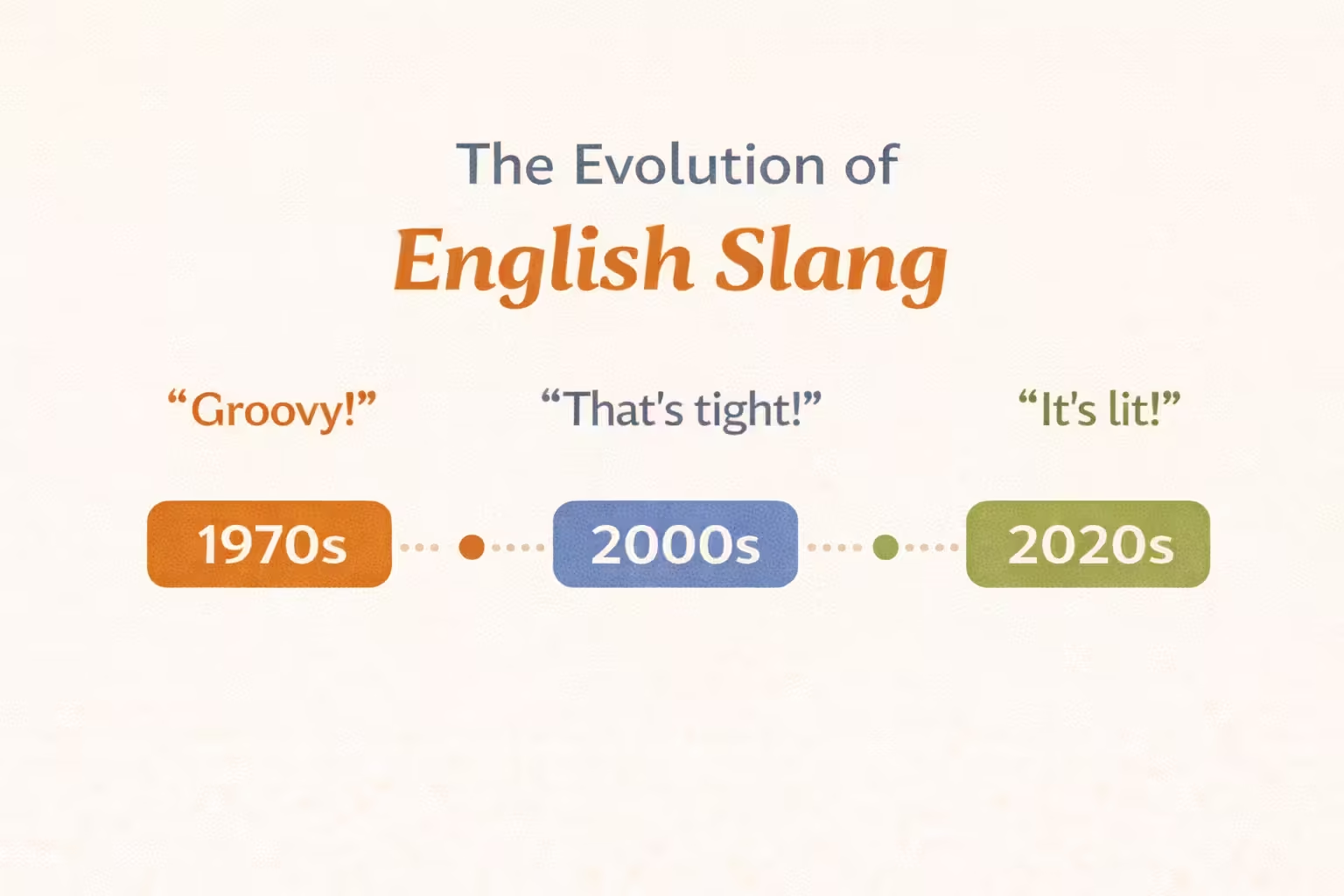
Jazz music didn’t just change how people danced – it changed how they talked. Musicians created words like “groovy” (originally meaning “in the groove” of good music), “hip,” and “cool.” These words spread from jazz clubs to college campuses and eventually to mainstream society.
The 1920s also saw women gaining more freedom, and their slang reflected this change. Terms like “flapper” for independent young women and expressions like “bee’s knees” (meaning excellent) showed a new, more playful attitude toward language.
Movies with sound, which started in the late 1920s, helped spread slang even faster. Suddenly, people across the country could hear how actors spoke, and popular phrases from films became part of everyday conversation.
Mid-Century Changes
The 1940s through 1960s brought massive changes in how slang spread. Radio connected the entire country, and later, television brought slang directly into people’s homes.
World War II also had a huge impact, as soldiers from different regions mixed together and shared their local expressions.
The 1950s saw the birth of teenager culture as we know it today. For the first time, young people had their own money, music, and identity separate from adults.
Rock ‘n’ roll music brought new slang like “rock on,” “cool cat,” and “far out.” Teenagers started being seen as a distinct group with their own language.
The 1960s exploded with new slang, much of it connected to social movements. The civil rights movement, anti-war protests, and counterculture all contributed new words and phrases. Terms like “right on,” “groovy,” and “uptight” became common. The hippie movement gave us “peace out,” “dig it,” and “far out, man.”
Television shows helped standardize slang across the country. When a popular TV character used a phrase, millions of viewers heard it at the same time. This created the first truly national slang trends.
The Digital Revolution: Slang at Light Speed
The internet changed everything about how slang develops and spreads. What once took months or years to travel across the country now happens in hours or even minutes. Social media platforms like Twitter, Instagram, and TikTok have become slang laboratories where new words are born daily.
The 1990s and early 2000s introduced internet-specific slang. “LOL” (laugh out loud), “BRB” (be right back), and “ROFL” (rolling on floor laughing) became common ways to express emotions in text. These abbreviations were necessary because early internet communication had character limits and typing was slower.
Text messaging created its own slang evolution. Limited characters and small keyboards led to creative abbreviations. “U” replaced “you,” “2” replaced “to” or “too,” and “4” replaced “for.” While smartphones have made typing easier, many of these shortcuts remain popular.
Modern Slang: The TikTok Generation
Today’s slang moves faster than ever before. A word can become popular on TikTok in the morning and be used by millions of teenagers by evening. This speed has changed how slang works. Instead of lasting for years or decades, some slang terms now have lifespans measured in weeks or months.
Current slang often comes from specific online communities before spreading to the general population. Gaming communities have given us words like “noob” (newbie) and “pwned” (dominated). Social media has created terms like “sliding into DMs” (sending private messages) and “ghosting” (suddenly stopping all communication).
Music continues to be a major source of slang. Hip-hop culture has contributed countless words and phrases to mainstream English. Terms like “bling,” “diss,” “chill,” and “my bad” all have roots in hip-hop and urban culture.
Why Slang Matters
Some people think slang is just lazy language or a sign that English is declining. This isn’t true. Slang shows that language is alive and growing. It demonstrates creativity, community, and cultural change. Every generation needs to make language their own, and slang is how they do it.
Slang also serves important social functions. It helps people identify with their groups and express ideas that formal language can’t capture. When someone says something is “fire,” they’re not just saying it’s good – they’re expressing enthusiasm in a way that connects them to their community.
Understanding slang evolution helps us understand social history. The slang of each era reflects the concerns, values, and experiences of that time. Jazz Age slang shows the rebellion and creativity of the 1920s. Internet slang reflects our digital age’s emphasis on speed and efficiency.
Looking Forward
Slang will continue evolving as long as people use language creatively. New technologies, social movements, and cultural changes will keep creating new words and meanings. The speed of change might increase even more as global communication becomes easier.
What’s certain is that slang will remain an important part of how we communicate. It adds color, emotion, and identity to our language. So, the next time your parents don’t understand your slang, remember – they had their own words that confused their parents too. Language evolution never stops, and slang is leading the way.
The story of English slang is really the story of English speakers – creative, rebellious, and always finding new ways to express themselves. From thieves’ cant to TikTok trends, slang shows us that language belongs to the people who use it, and they’re always ready to make it their own.
FAQs About English Slang in 2026
What is English slang?
English slang refers to informal words, expressions, and phrases used in casual conversations. Slang often changes over time and is commonly influenced by culture, social media, and younger generations.
Why does slang change so quickly?
Slang changes quickly because language evolves with trends, technology, music, memes, and social interactions. Social media platforms help new words spread faster than ever before.
What are some popular English slang words in 2026?
Some trending slang words in 2026 include words like “rizz,” “delulu,” “mid,” “cooked,” “NPC,” and “aura.” These words are commonly used in online conversations and social media.
Is slang important for English learners?
Yes. Learning slang helps English learners understand movies, social media, songs, and casual conversations. However, learners should also understand when slang is appropriate to use.
Can slang become part of standard English?
Yes. Many slang words eventually become accepted in everyday English. Words like “cool,” “okay,” and “jazz” started as slang before becoming widely accepted.
Is slang the same in every English-speaking country?
No. Different countries and regions have their own slang. For example, British slang, American slang, and Australian slang often use different expressions.
Should I use slang in formal writing?
No. Slang is usually best for casual conversations, social media, and informal communication. Formal essays, academic writing, and professional emails should avoid slang.
How does social media influence slang?
Social media platforms like TikTok, Instagram, and online communities create and spread new slang rapidly. Viral trends often introduce new words to millions of users.
Why do young people create new slang?
Young people create slang to express identity, build group connections, and create unique ways of communicating that reflect modern culture.
How can I learn modern English slang naturally?
You can learn slang by watching videos, listening to podcasts, following social media trends, reading comments online, and practicing conversations with native speakers.
Explore more topics here:
- 100+ English Collocations to Sound More Fluent
- 7 Reasons Why You are Not Fluent in English
- English Collocations with Meanings and Examples
- Expand English Vocabulary: Talking About Movies
Want to improve more? Explore our Spoken English Practice section for practical tips and lessons.
📚 Continue Learning English
Choose your next lesson and keep improving your English skills with our free English learning resources.