Spoken English

🗣 Spoken English – Improve Your Speaking Skills with Confidence

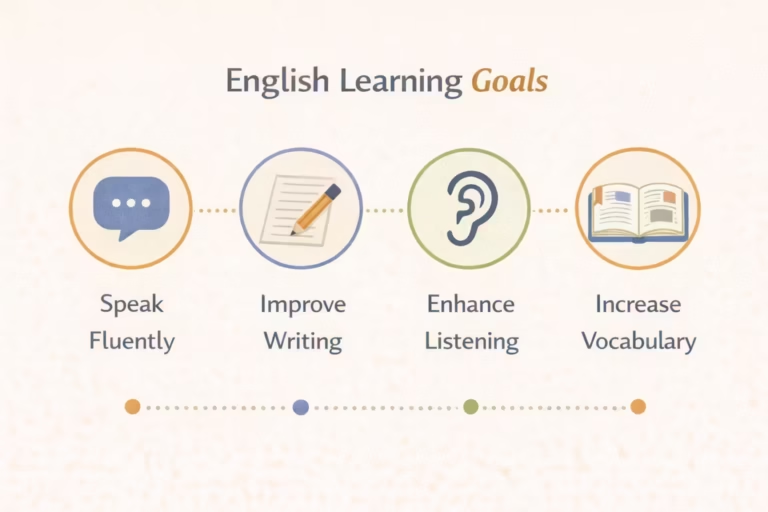
Spoken English is one of the most important skills for students, job seekers, and working professionals. If you want to speak English fluently and confidently, regular speaking practice is essential.

In this section, you can learn spoken English online through practical lessons, real-life dialogues, and structured conversation practice designed for everyday communication.

Why Spoken English Is Important

Improving your spoken English helps you:

  • Communicate clearly in daily conversations
  • Perform better in job interviews
  • Participate confidently in meetings
  • Improve pronunciation and fluency
  • Reduce fear of speaking English

Speaking confidently is not about using difficult words. It is about clarity, natural expressions, and regular practice.

What You Will Find in This Category

  • Daily English conversations
  • Real-life dialogues for practice
  • ESL conversation questions
  • Useful speaking phrases and expressions
  • Sentence practice for fluency
  • Interview and workplace communication practice

Each lesson is written in simple and clear English so that learners at different levels can practice independently.

Practice Spoken English for Real-Life Situations

This category focuses on practical usage. You will learn how to use English naturally in:

  • Daily conversations
  • Office communication
  • Travel situations
  • Social interactions
  • Presentations and interviews

With regular spoken English practice, you can build fluency and confidence step by step.

Suitable for All Learners

Whether you are:

  • A beginner starting to speak English
  • A student improving communication skills
  • A job seeker preparing for interviews
  • A working professional improving workplace English
  • An ESL learner practicing daily conversations

You will find structured lessons that help you improve naturally and confidently.

Build Confidence Through Practice

Fluency develops with regular practice and exposure. By practicing daily conversations and useful phrases, you can improve your English speaking skills and feel more confident in real-life communication.

Start exploring the lessons below and improve your spoken English step by step.

Practice daily. Speak confidently. Communicate clearly.

For more English learning resources, visit
Love You English.

  • 150 Everyday English Sentences – GOING – DOING – BEING

    Going, doing, and being are some of the most commonly used words in everyday English. In this post, 150 Everyday English Sentences – Going, Doing, Being, you will learn how these words are used naturally in daily conversations to talk about plans, actions, activities, and states. The sentences are simple, practical, and easy to understand, making them perfect for students, beginners, and ESL learners. Practicing these examples will help you improve your spoken English, sentence fluency, and confidence in real-life situations. This post is helpful for: English beginners and ESL learners Kids, school, and college students Working professionals English teachers and future teachers This topic is part of our English Sentences for English learners. 150 Everyday English Sentences – GOING – DOING – BEING Everyday…

  • English Speaking: 150 English Sentences with “Since” and “For”

    “Since” and “for” are commonly used in English to talk about time and duration, especially with the present perfect tense. In this post, 150 English Sentences with “Since” and “For”, you will learn how to use these two words correctly through clear and practical examples. These sentences will help you understand the difference between a point in time (since) and a period of time (for). Whether you are a student, ESL learner, or exam aspirant, this list will improve your grammar accuracy, sentence structure, and spoken English fluency. This topic is part of our English Sentences for English learners. ✅ Rules Quick Recap Since = starting point of time (when something began).👉 Example: I have lived here since 2010. For = duration of time (how…

  • 150+ English Sentences Using “Used To” for Practice

    The structure “used to” is commonly used in English to talk about past habits, routines, and situations that no longer happen. In this post, 150+ English Sentences Using “Used To” for Practice, you will learn how to use “used to” correctly with clear, simple, and practical examples. These sentences are ideal for students, ESL learners, and exam preparation, helping you understand the difference between past and present habits. By practicing these examples, you can improve your grammar accuracy, sentence formation, and spoken English confidence. This topic is part of our English Sentences for English learners. What Does “Used to” Mean? “Used to” is a phrase in English that indicates something that was true or habitual in the past but is no longer true in the…

  • English Speaking: 150 English Sentences with “SHOULD”

    The modal verb “should” is one of the most important words in English grammar. It is commonly used to give advice, suggestions, opinions, and moral obligations. In this post, 150 English Sentences with “Should”, you will learn how to use “should” correctly in different situations with clear and practical examples. These sentences will help students, ESL learners, and exam aspirants improve their grammar accuracy, sentence structure, and spoken English fluency. Whether you are writing, speaking, or preparing for competitive exams, this list will help you use “should” confidently and naturally. This topic is part of our English Sentences for English learners. Giving Advice (1–30) You should eat more vegetables. He should take rest after work. She should drink plenty of water. They should study harder…

  • 150 English Sentences With “Supposed to” and Its Usage for Spoken English

    The phrase “supposed to” is widely used in English to talk about rules, expectations, duties, and planned actions. In this post, 150 Sentences With “Supposed to” and Its Usage, you will learn how to use this common structure correctly in everyday conversations and formal situations. These sentences will help you understand different meanings of “supposed to,” including obligation, expectation, and assumption. Whether you are a student, an ESL learner, or preparing for exams, this list will improve your grammar accuracy, sentence formation, and spoken English confidence. This topic is part of our English Sentences for English learners. 150 English Sentences With “Supposed to” and Its Usage ✅ Usage of “Supposed to” Expectation / Obligation → what is expected or required. I am supposed to be…

  • ·

    A Guide to Language Learning Strategies for Faster and More Effective Learning

    Learning a new language can feel exciting, challenging, and sometimes overwhelming. Many learners spend hours studying but still feel they are not making enough progress. The truth is that success in language learning does not depend only on time—it depends on using the right strategies. Language learning strategies are practical techniques that help you understand, remember, and use a new language more effectively. These strategies include methods for improving vocabulary, strengthening memory, practicing speaking, developing listening skills, and staying motivated. When you use the right approach, learning becomes faster, easier, and more enjoyable. In this comprehensive guide, you will explore different types of language learning strategies and how to apply them in daily practice. Whether you are a beginner starting from scratch or an advanced…

  • Practice English Conversation at Gym in English

    Practice English Conversation at the Gym helps learners speak confidently in fitness and workout-related situations. Gym conversations often include talking about memberships, workout routines, equipment, fitness goals, schedules, and asking for help or advice. Learning these conversations prepares English learners for real-life interactions in a gym environment. This practice is ideal for daily spoken English, lifestyle conversations, and ESL role-play activities. The dialogues use easy vocabulary, polite expressions, and natural sentence patterns, making them suitable for beginners and intermediate learners. By practicing gym-related English conversations, learners can improve their fluency, confidence, and ability to communicate naturally in everyday situations. This topic is part of our English Dialogues for English learners. English Conversation at Gym Ajay: Hey, Sakshi, how’s it going? Ready for our workout today?…

  • ·

    A Guide to Understanding Native English Speakers: Tips for Better Listening Skills

    Many English learners say the same thing: “I understand my teacher, but I can’t understand native speakers.” If you feel this way, you are not alone. Native English speakers often talk fast, use contractions, connect words, and include slang or idioms in everyday conversation. This can make listening feel difficult and frustrating. However, understanding native speakers is a skill you can improve with the right techniques. It is not about knowing every word—it is about recognizing patterns, common expressions, and natural pronunciation. When you train your ears regularly, your listening confidence grows step by step. In this practical guide, you will learn why native English sounds different from textbook English and how to improve your listening skills effectively. We will explore useful strategies such as…

  • ·

    Best Online Resources for Learning English Effectively

    Discovering the best online resources for learning English effectively can make your language journey faster, more fun, and more structured. Whether you are a beginner building basic skills or an advanced learner improving fluency, the right tools and platforms can help you practice listening, speaking, grammar, vocabulary, and real-world communication—all from your own schedule. In this guide, we will explore top online English learning resources, including interactive courses, free video lessons, language apps, and helpful study communities. You’ll learn how each resource can support different parts of your learning plan, from building daily habits to preparing for exams. If you want to improve your English with tools that are proven, engaging, and learner-friendly, this article will help you find the best options to study smarter…

  • Daily English Dialogues Conversation: Enhance English Speaking

    Daily English Dialogues Conversation: Enhance English Speaking helps learners improve their spoken English through regular practice with real-life conversations. Daily dialogues cover common situations such as greetings, small talk, shopping, travel, office communication, and social interactions. Practicing these dialogues helps learners speak English more confidently and naturally. This conversation practice is ideal for beginners and intermediate learners who want to improve fluency step by step. The dialogues use easy vocabulary, short sentences, and practical expressions that learners can use in everyday life. By practicing daily English dialogues, learners can enhance their speaking skills, confidence, and overall communication ability in English. This topic is part of our English Dialogues for English learners. Daily English Dialogues John: Hey Sarah, how was your weekend? Sarah: It was great;…