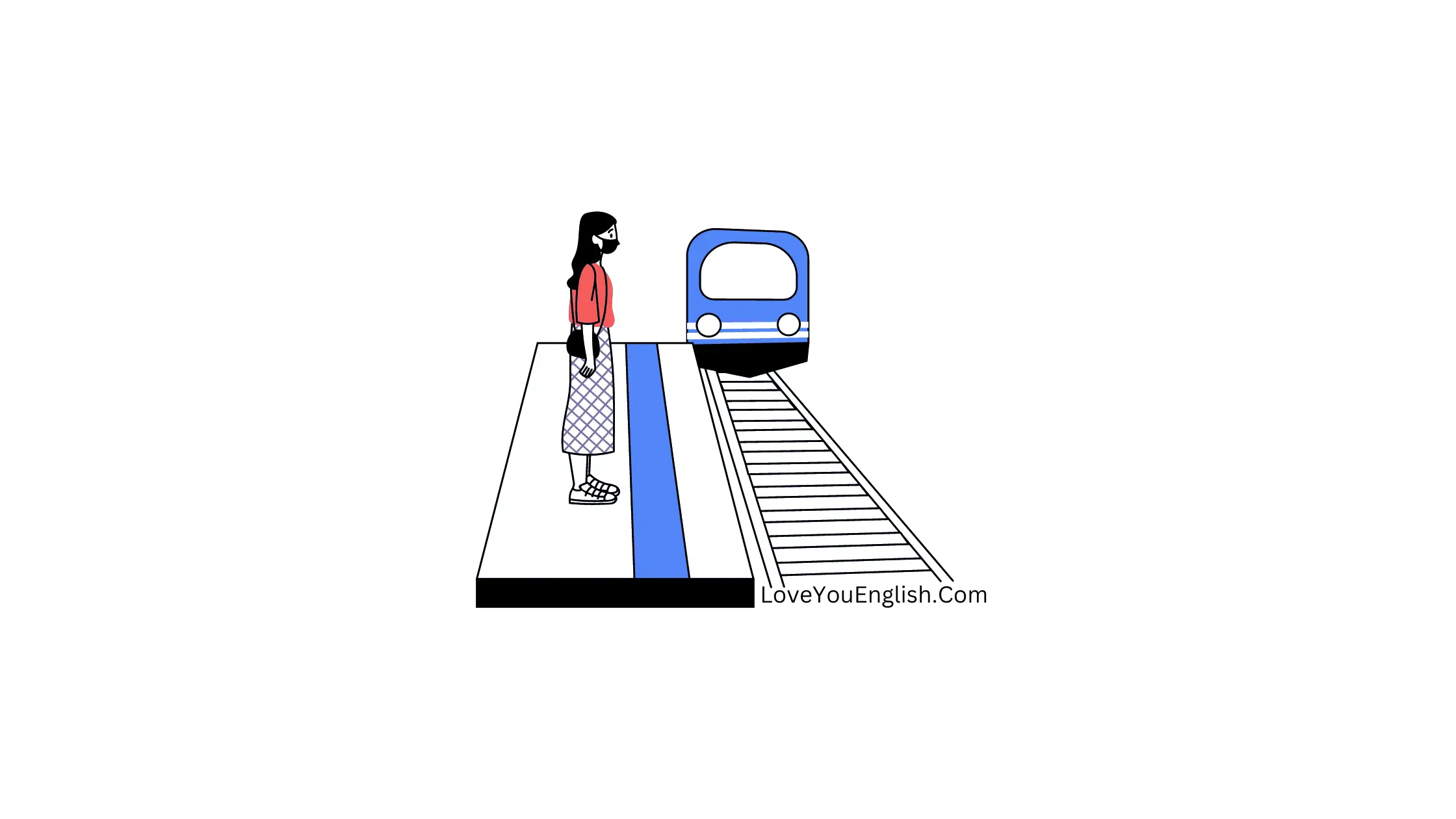
American English Conversation Practice: At a Railway Station helps learners practice real-life conversations used while traveling by train.
Many English learners struggle with practical speaking situations, and this topic focuses on common phrases, questions, and responses used at a railway station.
Written in simple and natural English, it is ideal for beginners, ESL learners, and travelers.
Practicing such conversations improves fluency, listening skills, and confidence in everyday communication.
This topic is useful for spoken English practice, role-plays, and daily conversation learning.
This topic is part of our English Conversation Practice for English learners.
American English Conversation Practice: At a Railway Station
Daily English Conversation Practice – At a Railway Station
Person 1: Hi there! Are you waiting for the train too?
Person 2: Hey! Yep, just waiting for the train to take me back home. How about you?
Person 1: Oh, I’m actually headed to visit a friend in the next town over. Excited for the trip!
Daily English Conversation Practice – At a Railway Station
Person 1: Hi! Are you waiting for the train too?
Person 2: Hey! Yeah, just about to head back home after a weekend getaway. How about you?
Daily English Conversation Practice – At a Railway Station
Person 1: Hi there! Waiting for the train?
Person 2: Hey! Yep, just catching the train back home after a weekend trip to visit family. What about you?
Person 1: Same here! Family time is always great, isn’t it? I’m heading back after spending some quality time with my parents.
Person 2: Absolutely! There’s nothing quite like it. So, how was your visit?
Person 1: It was wonderful, thanks for asking! We went on a little road trip and explored some nearby towns. Always nice to break the routine. Did you do anything special with your family?
Person 2: We had a big family barbecue yesterday. Lots of good food, laughter, and catching up. It was fantastic!
Person 1: That sounds like a blast! There’s something magical about those family gatherings.
Person 2: Totally! So, do you take the train often?
Person 1: Not really, but I do enjoy it when I get the chance. It’s so much more relaxing than driving, don’t you think?
Person 2: Absolutely! Plus, you get to sit back, relax, and maybe even catch up on some reading or just enjoy the scenery passing by.
Person 1: Exactly! Looks like our train is arriving. Safe travels to you!
Person 2: You too! Maybe we’ll run into each other on another train ride someday. Take care, bye!
FAQs: American English Conversation Practice – At a Railway Station
1. Why should I practice railway station conversations in English?
Railway station conversations help you communicate confidently while traveling. They prepare you for real-life situations such as buying tickets, asking for directions, checking train schedules, and talking with other passengers.
2. Who are these conversations suitable for?
These dialogues are ideal for:
- English beginners
- ESL learners
- Students
- Travelers
- Spoken English learners
- Anyone who wants to improve everyday communication
3. What topics are covered in these railway station conversations?
The conversations include:
- Greeting strangers
- Waiting for trains
- Talking about travel plans
- Visiting family and friends
- Weekend trips
- Hobbies
- Job interviews
- Train journeys
- Travel experiences
These are common topics during train travel.
4. What are some common greetings at a railway station?
Useful greetings include:
- Hi there!
- Hello!
- Good morning!
- Are you waiting for the train too?
- Is this seat taken?
- How are you today?
These expressions help start friendly conversations.
5. How can I ask about someone’s travel plans?
You can ask:
- Where are you headed?
- Where are you going?
- Are you traveling for work or vacation?
- Is this your final destination?
- Are you visiting family?
These questions are common in casual conversations.
6. What are some useful railway station vocabulary words?
Common vocabulary includes:
- Railway station
- Platform
- Ticket
- Train
- Passenger
- Departure
- Arrival
- Schedule
- Reservation
- Platform number
- Luggage
- Waiting room
- Station master
- Track
- Journey
Learning these words improves travel communication.
7. How can I talk about my train journey?
Useful expressions include:
- I’m traveling to…
- I’m visiting my family.
- I’m going on vacation.
- It’s a business trip.
- I enjoy traveling by train.
- The journey was comfortable.
These sentences are useful in everyday conversations.
8. How can I ask for help at a railway station?
Useful questions include:
- Which platform does the train leave from?
- What time does the train arrive?
- Is the train on time?
- Where can I buy a ticket?
- Could you help me find Platform 4?
- Is this the right train?
These questions are helpful when traveling.
9. What does “bucket list” mean?
A bucket list is a list of experiences or places someone hopes to enjoy or visit during their lifetime.
Example:
“Visiting Japan is on my bucket list.”
10. What does “Safe travels!” mean?
Safe travels! is a friendly expression used to wish someone a safe and pleasant journey.
It is commonly used when people are leaving for a trip.
11. How do these conversations improve speaking skills?
They help learners:
- Build confidence.
- Learn natural expressions.
- Improve pronunciation.
- Expand travel vocabulary.
- Practice everyday conversations.
- Develop listening skills.
Regular practice leads to greater fluency.
12. Can I change the conversations to fit my own experiences?
Yes. You can replace:
- Destinations
- Travel reasons
- Activities
- Family members
- Hobbies
Personalizing the dialogues makes speaking practice more meaningful.
13. What grammar is used in these dialogues?
The conversations naturally practice:
- Present Simple
- Present Continuous
- Present Perfect
- Past Simple
- Future plans
- Question forms
These are common grammar structures used in everyday English.
14. Are these conversations useful for classroom role-plays?
Absolutely. Teachers can use them for:
- Pair work
- Role-plays
- Listening practice
- Pronunciation exercises
- Speaking assessments
- Vocabulary lessons
- Group discussions
They create realistic speaking practice.
15. Are these conversations useful for travel?
Yes. They help travelers:
- Ask for information.
- Speak with other passengers.
- Understand announcements more easily.
- Feel more confident while traveling.
- Handle common situations at railway stations.
These are practical English skills.
16. Can these dialogues help with English exams?
Yes. Travel is a common topic in:
- IELTS Speaking
- TOEFL Speaking
- School oral exams
- ESL speaking tests
- Conversation assessments
Practicing travel dialogues improves fluency and confidence.
17. How can I improve my pronunciation while practicing?
Try these methods:
- Read aloud slowly.
- Listen to native speakers.
- Repeat difficult sentences.
- Record your voice.
- Practice with a speaking partner.
- Focus on natural rhythm and intonation.
Daily practice improves pronunciation over time.
18. How often should I practice conversation dialogues?
Practicing for 10–20 minutes each day is enough to improve speaking, listening, vocabulary, and confidence. Short daily practice is more effective than occasional long sessions.
19. What are some useful closing expressions in travel conversations?
Common closing phrases include:
- Safe travels!
- Have a great trip!
- Take care!
- Enjoy your journey!
- See you again!
- Hope to see you soon!
- Have a wonderful day!
These expressions make conversations sound warm and polite.
20. What is the best way to become fluent in everyday travel conversations?
Practice real-life dialogues regularly, learn useful travel expressions, role-play common situations, and use new vocabulary whenever possible. Listening to English conversations, repeating them aloud, and creating your own travel dialogues will help you communicate naturally and confidently during train journeys and other travel experiences.
📚 Continue Learning English
Choose your next lesson and keep improving your English skills with our free English learning resources.