Introduction
Do you often sit down to work, but end up distracted after just a few minutes? You check your phone, browse social media, or just stare at the screen. Sound familiar?
If yes, you are not alone. Millions of people struggle to stay focused. But here is the good news — there is a simple, free, and proven method to fix this.
Learning how to use the Pomodoro Technique for maximum productivity can completely change the way you work and study. It helps you break your work into small, manageable chunks so you always stay sharp and energized.
In this guide, you will learn everything about the Pomodoro Technique — what it is, how it works, why it matters, and how you can start using it today.
What Is the Pomodoro Technique?
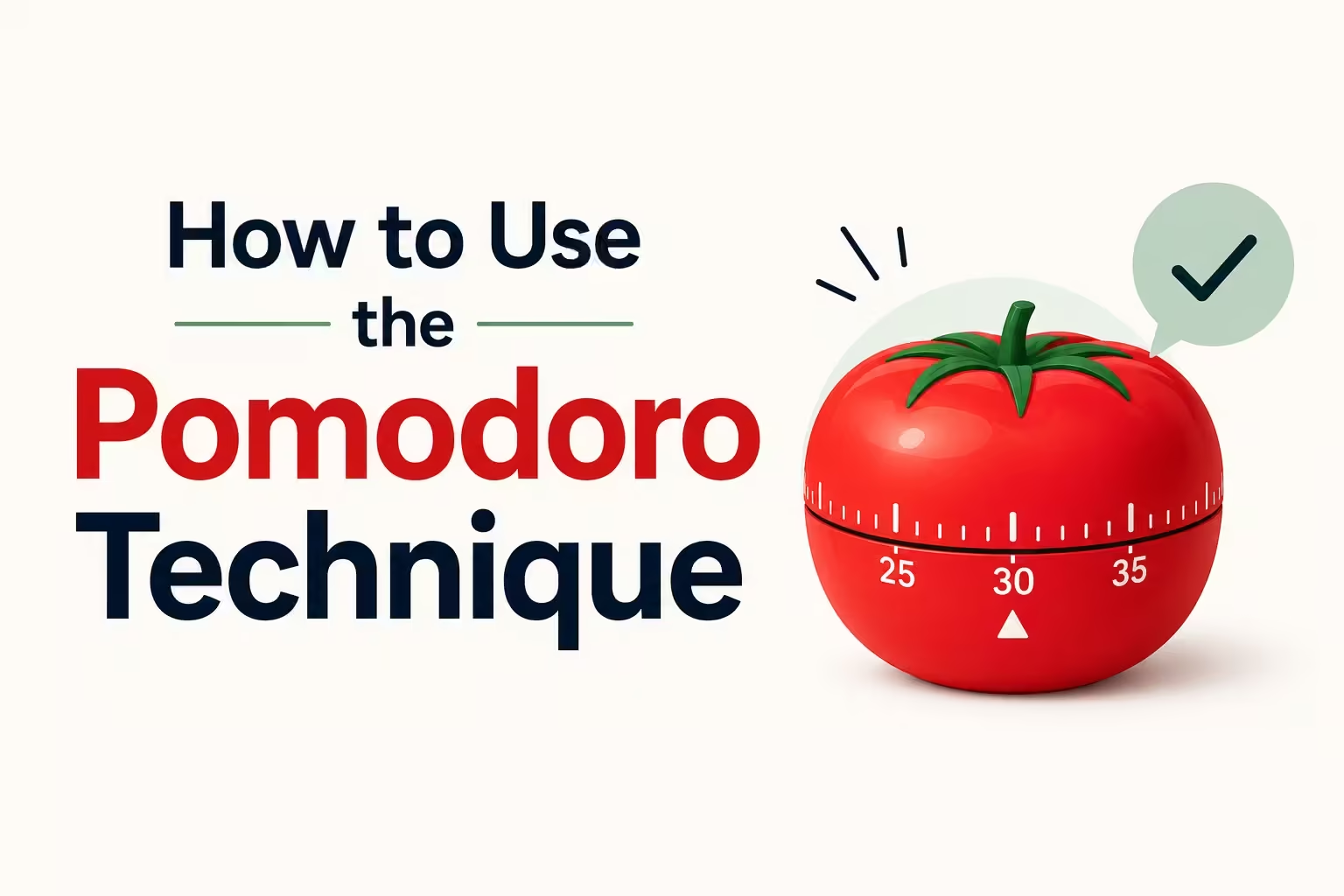
The Pomodoro Technique is a time management method created by Francesco Cirillo in the late 1980s. He was a university student who struggled to focus. He used a tomato-shaped kitchen timer (in Italian, “pomodoro” means tomato) to track his work sessions.
Here is the basic idea:
- You work for 25 minutes without any interruptions.
- Then you take a 5-minute break.
- After four rounds, you take a longer break of 15 to 30 minutes.
Each 25-minute work block is called a Pomodoro. This simple rhythm trains your brain to focus for short bursts and rest regularly. It sounds almost too simple — but it is backed by science and used by millions of productive people worldwide.
A Simple Definition
The Pomodoro Technique is a structured time management system where you divide your work into focused 25-minute intervals separated by short breaks. It helps you avoid burnout, fight procrastination, and get more done in less time.
Why Is the Pomodoro Technique Important?
You might wonder — why not just work for hours without stopping? The truth is, your brain is not designed to focus for long stretches.
Research shows that the human brain starts losing focus after about 20 to 30 minutes of continuous work. After that, your attention drops, mistakes increase, and productivity falls.
The Pomodoro Technique works with your brain, not against it. Here is why it matters so much:
Benefits in Daily Life
- You stop wasting time on distractions.
- You feel less overwhelmed because tasks are broken into smaller steps.
- You develop a healthy rhythm of work and rest.
- You feel a strong sense of accomplishment after each Pomodoro.
Benefits for Your Career
- You become more reliable and meet deadlines consistently.
- You produce higher-quality work because you are fully focused.
- You manage complex projects with greater ease.
- Employers notice and value people who work efficiently.
Benefits for Students and Learners
- Study sessions become more effective.
- You retain information better because you review it in short focused blocks.
- Exam preparation feels less stressful.
- You can use it to improve skills like English, coding, or writing.
Benefits for Mental Well-being
- Reduces anxiety caused by large, overwhelming tasks.
- Prevents mental fatigue and burnout.
- Gives your brain regular recovery time.
- Builds confidence as you see daily progress.
The Core Components of the Pomodoro Technique
To truly understand how to use the Pomodoro Technique for maximum productivity, you need to know its five key components. Think of these as the building blocks of the entire system.
1. Focus and Deep Work
The most important part of any Pomodoro is 100% focused attention. No phone. No social media. No interruptions. During those 25 minutes, you give everything to one single task.
This practice trains your brain to enter a state called deep work — a level of concentration where you do your best thinking and highest-quality work.
2. Task Planning
Before you start, you need a clear plan. Write down every task you need to complete. Estimate how many Pomodoros each task will take. This simple step turns a vague to-do list into a realistic daily schedule.
3. Tracking Progress
Keep a tally of your completed Pomodoros. You can use a notebook, a whiteboard, or a simple app. Tracking progress gives you a feeling of momentum and motivates you to keep going.
4. Short Breaks (5 Minutes)
Breaks are not laziness — they are part of the system. A short break refreshes your mind. During a 5-minute break, you should:
- Stand up and stretch.
- Walk around the room.
- Drink water or tea.
- Look away from the screen to rest your eyes.
Avoid checking emails or social media during short breaks. This keeps your brain in a calm, refreshed state.
5. Long Breaks (15–30 Minutes)
After every four Pomodoros, reward yourself with a proper rest. During a long break, you can:
- Take a short walk outside.
- Have a snack.
- Do light stretching or breathing exercises.
- Chat briefly with a friend or colleague.
This longer recovery time prevents burnout and prepares your brain for the next round of focused work.
Step-by-Step Guide: How to Use the Pomodoro Technique for Maximum Productivity
Now let us get practical. Here is exactly how to start using the Pomodoro Technique today — even if you have never tried it before.
Step 1 — Choose Your Task
Pick one specific task you want to work on. Be clear and precise.
Bad example: “Study English.” Good example: “Practice 20 new vocabulary words for my English exam.”
A clear task gives your brain a specific target. Vague tasks lead to wandering attention.
Step 2 — Set Your Timer for 25 Minutes
Use any timer you like:
- A physical kitchen timer (the classic method)
- Your phone’s built-in timer
- A Pomodoro app like Forest, Focus Keeper, or Be Focused
- A browser extension like Marinara Timer
Start the timer and begin working immediately. Do not delay. The moment the timer starts, your Pomodoro has begun.
Step 3 — Work With Complete Focus
For the full 25 minutes, give your task 100% of your attention. If a random thought pops into your head (like “I need to call my friend”), write it down on a notepad and return to your task. Do not act on it right now.
If someone tries to interrupt you, politely say: “I am in the middle of something. Can I come back to you in 15 minutes?” This protects your focused time.
Step 4 — Take a 5-Minute Break
When the timer rings, stop immediately — even if you are in the middle of a great idea. Mark one Pomodoro as complete (a simple checkmark works fine). Then enjoy your 5-minute break.
Step 5 — Repeat the Cycle
Start your timer again and begin the next Pomodoro. After every four Pomodoros, take your longer 15–30 minute break.
A typical productive morning using this technique might look like this:
| Time | Activity |
|---|---|
| 9:00 – 9:25 | Pomodoro 1 (Writing report) |
| 9:25 – 9:30 | Short break |
| 9:30 – 9:55 | Pomodoro 2 (Writing report) |
| 9:55 – 10:00 | Short break |
| 10:00 – 10:25 | Pomodoro 3 (Editing report) |
| 10:25 – 10:30 | Short break |
| 10:30 – 10:55 | Pomodoro 4 (Responding to emails) |
| 10:55 – 11:25 | Long break (30 minutes) |
Notice how much structured, focused work fits into just two and a half hours.
Real-Life Applications of the Pomodoro Technique
The beauty of this technique is that you can apply it in almost any area of life. Let us look at some real-world scenarios.
At School or University
Maya is a college student who has a big English exam in three days. She used to study for hours and feel exhausted without retaining much. Now she uses the Pomodoro Technique:
- Pomodoro 1: Read and highlight 10 pages of her textbook.
- Pomodoro 2: Write a summary of what she read in her own words.
- Pomodoro 3: Practice 20 vocabulary words using flashcards.
- Pomodoro 4: Take a short practice test.
After each session, Maya feels accomplished — not drained. Her scores have improved significantly.
At Work
David is a software developer. He used to struggle with distractions in the open office. Now he puts on noise-cancelling headphones, sets his timer, and enters focused Pomodoro mode. His colleagues know not to disturb him when he is in a session. His coding output has doubled.
For Learning English
The Pomodoro Technique is especially powerful for language learners. Here is how you can use it to improve your English speaking skills and fluency:
- Pomodoro 1: Watch a 20-minute English YouTube video and take notes on new phrases.
- Pomodoro 2: Practice pronouncing those phrases out loud in front of a mirror.
- Pomodoro 3: Write a short paragraph using the new vocabulary.
- Pomodoro 4: Listen to an English podcast or audiobook for comprehension practice.
Using this focused method, even 2 hours of daily practice can produce remarkable progress in English fluency, pronunciation, vocabulary, and confidence.
During Job Interviews Preparation
Prepare for a job interview using timed focus sessions:
- Pomodoro 1: Research the company.
- Pomodoro 2: Practice answering common interview questions out loud.
- Pomodoro 3: Prepare your own questions for the interviewer.
- Pomodoro 4: Review your resume and key talking points.
This structured approach ensures thorough preparation without the panic of last-minute cramming.
For Travel Planning
Even travel planning becomes less stressful. Use one Pomodoro to research destinations, another to compare hotels, and a third to book flights. Tasks that once felt overwhelming become simple and manageable.
Common Mistakes to Avoid When Using the Pomodoro Technique
Many beginners make the same errors when they start. Avoid these pitfalls to get the most out of your sessions.
Mistake 1 — Working Through Your Break
Some people feel guilty taking breaks. They think: “I am on a roll. I should keep going.” This is a trap. Skipping breaks leads to mental fatigue. Your productivity will drop sharply within an hour. Trust the system. Take every break.
Mistake 2 — Checking Your Phone During Focus Time
Even a quick glance at your phone during a Pomodoro can break your concentration completely. Studies show it takes an average of 23 minutes to regain full focus after an interruption. Keep your phone face down, on silent, or in another room during sessions.
Mistake 3 — Choosing Tasks That Are Too Vague
“Work on my project” is not a good Pomodoro task. It is too big and unclear. Instead, break large projects into small, specific actions: “Write the introduction paragraph of my project report.” Clear tasks make focused work possible.
Mistake 4 — Using Breaks Unproductively
Using your 5-minute break to scroll through social media is counterproductive. Your brain needs a genuine rest, not more screen stimulation. Walk, stretch, breathe — activities that actually refresh you.
Mistake 5 — Setting Unrealistic Daily Goals
Beginners sometimes plan 10 or 12 Pomodoros for their first day. This is too much. Start with 4 to 6 Pomodoros per day. Build the habit slowly. Quality focused work beats quantity every time.
Mistake 6 — Ignoring the Planning Step
Starting your Pomodoros without a written task list leads to confusion and wasted time. Spend 10 minutes every morning planning your Pomodoros. This small investment saves hours of aimless effort.
Mistake 7 — Multitasking During a Session
One Pomodoro equals one task. Do not try to write an email, answer a message, and edit a document at the same time. Multitasking reduces the quality of all work. Single-tasking is the key to the Pomodoro system.
Tips and Best Practices for Maximum Results
Here are the most effective strategies to get the absolute best results from the Pomodoro Technique.
Tip 1 — Plan Your Pomodoros the Night Before
Before you go to bed, write down your top three priorities for tomorrow. Assign Pomodoros to each one. When you wake up, you already know exactly what to do and when. This eliminates morning indecision and wasted energy.
Tip 2 — Start With Your Hardest Task First
Your mental energy is highest in the morning. Use your first Pomodoros on your most challenging and important tasks. Easier tasks can wait for the afternoon when your energy is lower. This is sometimes called “eating the frog” — doing the hardest thing first.
Tip 3 — Use a Dedicated Workspace
Train your brain to associate one specific place with deep focus. Whether it is a desk, a corner of a library, or a coffee shop, use the same spot for your Pomodoros. Over time, just sitting in that spot will trigger your brain to enter focus mode automatically.
Tip 4 — Combine Pomodoro With a To-Do List
Use a simple system:
- Write your task list for the day.
- Estimate how many Pomodoros each task needs.
- Work through them in order.
- Cross off completed tasks as you go.
This combination of the Pomodoro Technique and a to-do list is one of the most powerful productivity systems available.
Tip 5 — Adjust the Timer If Needed
The standard Pomodoro is 25 minutes, but it is not a rigid rule. Some people find 45-minute sessions followed by 10-minute breaks work better for them. Experiment and find your ideal rhythm. The goal is sustained focus, not strict adherence to a number.
Tip 6 — Track Your Pomodoros Weekly
At the end of each week, count your total completed Pomodoros. Ask yourself: How many tasks did I finish? How did I feel during my sessions? What can I improve? This weekly review helps you grow faster and refine your system over time.
Tip 7 — Use Apps to Automate the Process
Technology makes the Pomodoro Technique even easier. Try these popular tools:
- Forest App — Grow a virtual tree when you focus. If you leave the app, the tree dies. Highly motivating.
- Focus Keeper — A clean, simple Pomodoro timer with tracking features.
- Toggl Track — Great for professionals who want to log work time.
- Notion or Trello — Combine task management with Pomodoro scheduling.
Tip 8 — Reward Yourself After Long Sessions
After completing a full set of four Pomodoros, give yourself a meaningful reward. It could be a cup of your favourite coffee, a short walk, watching a funny video, or reading a few pages of a novel. Rewards reinforce the habit and make the process enjoyable.
Tip 9 — Be Patient With Yourself
At first, 25 minutes of pure focus may feel very difficult. That is completely normal. Your attention span is like a muscle — it needs regular training to grow stronger. Start with what feels comfortable and build gradually. Even 15-minute focus sessions are a great starting point.
Tip 10 — Combine Pomodoro With Other Productivity Habits
The Pomodoro Technique pairs beautifully with other good habits:
- Morning journaling to clarify your goals before starting.
- Exercise to boost brain energy before your first session.
- Meditation to sharpen concentration.
- Digital detox to remove temptations during focus time.
FAQs: How to Use the Pomodoro Technique for Maximum Productivity
Q1. What is the Pomodoro Technique and how does it work?
The Pomodoro Technique is a time management method that involves working in focused 25-minute sessions called Pomodoros, followed by a 5-minute break. After four sessions, you take a longer break of 15 to 30 minutes. It helps you maintain concentration, avoid burnout, and get more done in less time.
Q2. Can I use the Pomodoro Technique for studying?
Absolutely. The Pomodoro Technique is one of the best methods for studying. It helps you retain information better, avoid mental fatigue, and cover more material in focused sessions. Students use it for exam preparation, language learning, reading, and completing assignments.
Q3. What happens if I get interrupted during a Pomodoro?
If you face a minor interruption (like a quick thought), write it down and return to your task. If it is a major interruption that forces you to stop, restart the Pomodoro from the beginning. A Pomodoro that is interrupted does not count as a completed one. Over time, you will naturally minimize interruptions to protect your sessions.
Q4. Is 25 minutes always the right length for a Pomodoro?
The standard is 25 minutes, but it is flexible. Some people work better with 30- or 45-minute sessions. The key principle is: work in timed, focused bursts followed by regular breaks. Experiment to find the duration that works best for your brain and the type of work you are doing.
Q5. How many Pomodoros should I do per day?
For beginners, start with 4 to 6 Pomodoros per day. Experienced users can complete 8 to 12 Pomodoros in a full workday. Do not chase high numbers at first. Focus on the quality of your sessions rather than the quantity. Consistency over time is what produces extraordinary results.
Q6. Can the Pomodoro Technique help with procrastination?
Yes — this is one of its greatest strengths. Procrastination often happens because a task feels too big or overwhelming. The Pomodoro Technique shrinks the task to just 25 minutes. Telling yourself “I only need to focus for 25 minutes” makes it much easier to get started. Once you begin, momentum builds naturally.
Q7. What are the best Pomodoro apps to use?
Some of the most popular and effective Pomodoro apps include Forest, Focus Keeper, Be Focused Pro, Toggl Track, and the Marinara Timer (browser-based). Each offers slightly different features, so try a few to find the one that suits your working style best.
Conclusion
By now, you have a complete understanding of how to use the Pomodoro Technique for maximum productivity.
This simple yet powerful method has helped students, professionals, writers, athletes, and language learners all over the world to focus better, work smarter, and achieve more every single day.
Let us quickly recap what you have learned:
- The Pomodoro Technique divides your work into focused 25-minute sessions with regular breaks.
- It works with your brain’s natural attention cycle to maximize output and minimize fatigue.
- You can apply it to study, work, language learning, interview preparation, and creative projects.
- Common mistakes — like skipping breaks, multitasking, and vague planning — can be easily avoided.
- Simple daily habits and the right apps make the technique even more powerful.
The most important step is to start today. You do not need any special equipment. Pick one task, set a timer for 25 minutes, and begin. That first Pomodoro might just change the way you work — forever.
If you found this article helpful, share it with a friend or colleague who struggles with focus.
Leave a comment below telling us how you plan to use the Pomodoro Technique in your daily life. And explore our other articles on time management, productivity, and English learning skills for even more practical tips.
Your most productive days are ahead of you. One Pomodoro at a time.
Find interesting topics to learn:
- English Speaking: 150 English Sentences for Phone Conversations
- 100 Business Email Sentences for Effective Communication
- Best AI Essay Writers: A Student’s Guide to Smart Writing Tools
- American Campus Life English: Slang, Terms & Social Phrases
- English for School Students: The Complete Guide to Learn, Improve, and Succeed
- How to Deal with Stress and Anxiety in College: A Complete Guide for Students
📚 Continue Learning English
Choose your next lesson and keep improving your English skills with our free English learning resources.