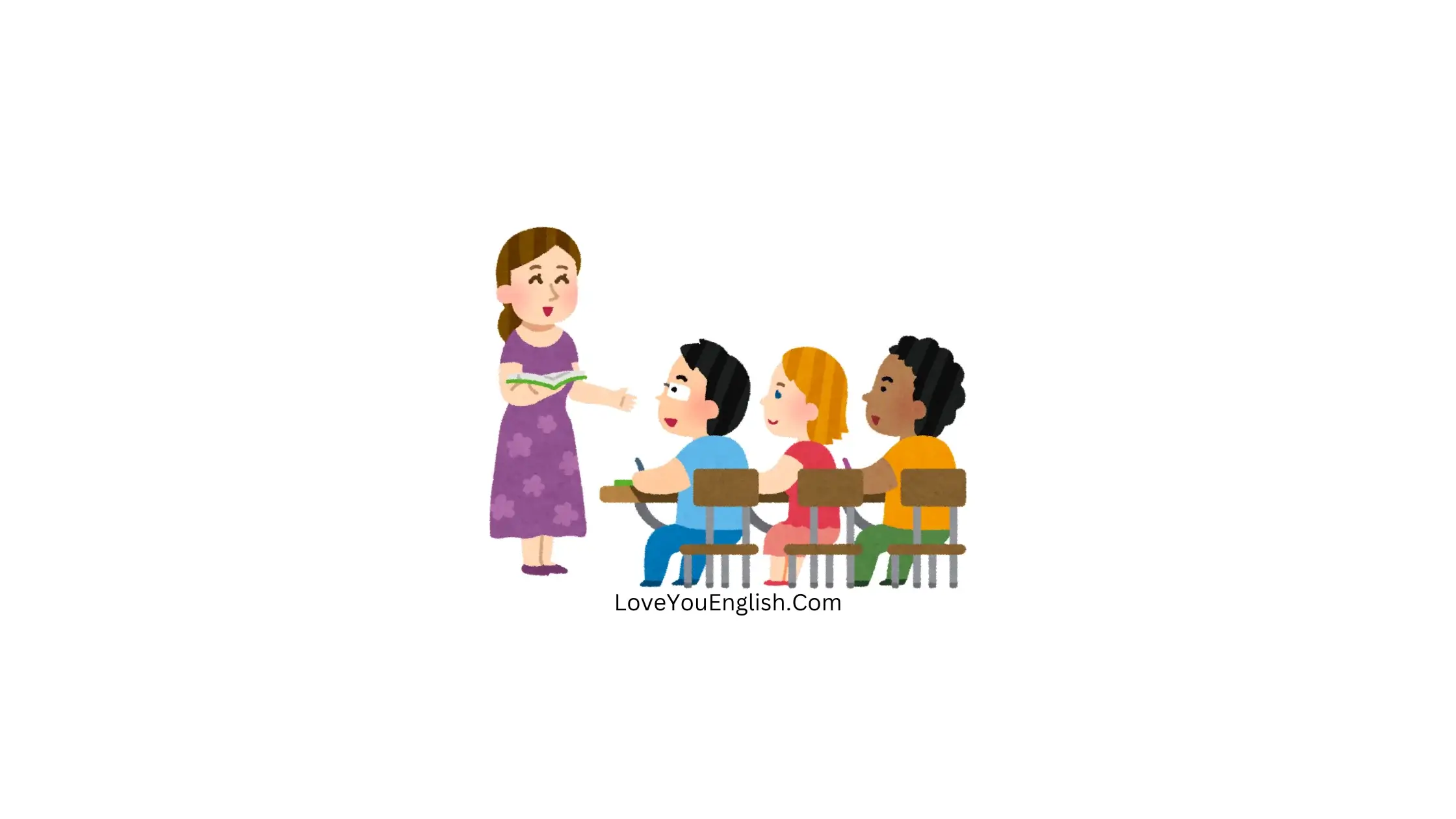
American English Conversation in a Classroom helps learners understand and use common English phrases spoken in U.S. classrooms.
Table of Contents
ToggleClassroom conversations include asking questions, requesting clarification, participating in discussions, and interacting politely with teachers and classmates. Learning these conversations helps students feel more confident in an American education setting.
These dialogues are ideal for ESL students, immigrants, and international learners who want to practice real-life American English.
They use natural American expressions, simple sentence structures, and classroom-related vocabulary, making them perfect for beginners and intermediate learners.
By practicing classroom conversations, learners can improve their fluency, listening skills, and classroom communication confidence.
This topic is part of our English Dialogues for English learners.
American English Conversation In a Classroom
Daivik: Hey Navya, how’s it going? Did you understand yesterday’s math lesson?
Navya: Hey Daivik! Yeah, I think I got most of it. The algebra part was a bit tricky though. How about you?
Daivik: I’m doing okay. Yeah, I agree, algebra can be a bit tricky sometimes. But I think with some practice, we’ll get the hang of it.
Navya: Totally! Speaking of practice, are you up for working on the homework together after class?
Daivik: That sounds like a plan! We can help each other out if we get stuck on any questions.
Navya: Awesome! By the way, have you heard about the upcoming science fair? I’m thinking of participating. Are you interested too?
Daivik: Oh yeah, I’ve heard about it! I haven’t decided yet, but it does sound like a fun opportunity. What project ideas do you have in mind?
Navya: I was thinking of something related to renewable energy or maybe even a project about plant growth under different conditions. How about you?
Daivik: Those are great ideas! I was leaning towards something in astronomy, like studying the phases of the moon or exploring the effects of gravity. Maybe we could brainstorm some more ideas together.
Navya: Definitely! We could meet up at the library this weekend and do some research. It’ll be more fun and productive that way.
Daivik: Sounds like a plan! Hey, did you hear about the sports tournament next month? I know you’re into basketball. Are you going to try out for the team?
Navya: Oh yeah, I’m really excited about the tournament! I’m planning to try out for the team. It would be awesome to represent our school and play with other schools too.
Daivik: That’s fantastic! I’ll be cheering for you during the tryouts. If you need any extra practice or tips, just let me know. I’m sure you’ll do great!
Navya: Thanks, Daivik! That means a lot. Hey, speaking of cheering, are you going to the football match this weekend? I heard it’s going to be a close game.
Daivik: Yeah, I wouldn’t miss it for the world! It’s always exciting to support our school’s team, especially in a close match. Are you coming too?
Navya: Definitely! I’ll be there with some friends. It’s going to be a fun weekend.
Daivik: Absolutely! Well, looks like class is about to start. Let’s catch up after school and tackle that math homework together.
Navya: Sounds like a plan, Daivik! Thanks for the chat. See you later!
Daivik: See you later, Navya!
American English Conversation Practice: In the Classroom
Daivik: Hi Navya, did you finish reading that new novel for English class?
Navya: Hey Daivik! Not yet, I’m about halfway through. It’s really interesting though. Have you started it?
Daivik: Yeah, I finished it last night. I won’t spoil anything, but I think you’ll enjoy the ending. Let me know when you finish so we can discuss it.
Navya: Will do! Oh, speaking of English class, have you started working on our group project about famous authors?
Daivik: Yes, I’ve started gathering information about J.K. Rowling. She’s one of my favorite authors. What about you? Which author are you researching?
Navya: I chose Agatha Christie. Her mystery novels are so captivating. I’m excited to learn more about her life and writing style.
Daivik: That’s a great choice! We should compare notes and share what we’ve learned. It’ll make our presentation more diverse and interesting.
Navya: Definitely! Hey, I wanted to ask if you’re interested in joining the environmental club. We’re planning a tree-planting activity next month.
Daivik: Oh, I’ve been thinking about joining! The tree-planting sounds like a meaningful initiative. Count me in!
Navya: Awesome! The more volunteers, the better. We’ll make a positive impact on the environment together.
Daivik: Absolutely. Hey, did you hear about the upcoming school talent show? I remember you mentioned you play the guitar. Are you thinking of participating?
Navya: Yeah, I’m considering it! I’ve been practicing some songs, and it could be a fun experience. Are you thinking of showcasing your talents too?
Daivik: I’m not sure yet. Maybe I’ll try something new, like a stand-up comedy routine or a magic trick. It’s still in the brainstorming phase.
Navya: That sounds exciting! Let me know if you need any help with ideas or rehearsals. We can support each other in our performances.
Daivik: Thanks, Navya! Hey, before I forget, are you free this Saturday? A few of us are planning to hang out at the park and have a picnic. You should join us!
Navya: Sounds like a blast! I’m free on Saturday, count me in. It’ll be great to relax outdoors and spend time with friends.
Daivik: Perfect! I’ll send you the details later. Well, looks like the teacher is coming in. Let’s catch up more during lunch break.
Navya: Sounds good, Daivik! Thanks for the chat. See you later!
Daivik: See you later, Navya!
For quick access to our best content, visit our English learning resources section.
American English Conversation Practice: In the Classroom
Daivik: Hey Navya, how’s your day going so far?
Navya: Hi Daivik, it’s been pretty good! I’m actually looking forward to our history class today. Mr. Patel always makes it so interesting.
Daivik: I know, right? His stories about ancient civilizations are fascinating. Speaking of which, have you started working on our history project about the Egyptian pyramids?
Navya: Yes, I’ve been researching different theories about how the pyramids were built. It’s amazing to learn about the engineering skills of ancient Egyptians. How about you? What aspect are you focusing on?
Daivik: I’m diving into the cultural significance of the pyramids and how they were linked to Egyptian religious beliefs. It’s a deep topic, but I find it really intriguing.
Navya: That sounds fascinating! We should compare our findings and maybe even collaborate on some parts of the project.
Daivik: Definitely! Teamwork always makes projects more enjoyable and thorough. Oh, by the way, did you hear about the upcoming debate competition? I remember you’re quite skilled at public speaking.
Navya: Yeah, I heard about it! I’m thinking of participating, but I’m still a bit nervous about debating in front of a large audience. Are you planning to join too?
Daivik: I’m considering it. Debates can be intense, but they’re also a great way to improve our critical thinking and communication skills. Maybe we can practice together to build confidence.
Navya: That’s a good idea! Having practice sessions will definitely help. Hey, speaking of extracurricular activities, have you checked out the art club’s latest exhibition? Some of the paintings are amazing.
Daivik: Not yet, but I’ve heard it’s fantastic. I love appreciating different forms of art. We should go together sometime this week.
Navya: Absolutely! It’s always inspiring to see the creativity of our peers. Oh, and before I forget, are you free this weekend? A group of us are planning to volunteer at the local animal shelter.
Daivik: I’m free on Saturday morning! Volunteering at the animal shelter sounds like a rewarding experience. Count me in!
Navya: Awesome! I’ll send you the details. It’ll be great to make a positive impact on the community together.
Daivik: Agreed. Well, it looks like the bell is about to ring. Let’s catch up more during lunch break.
Navya: Sounds good, Daivik! Thanks for the chat. See you later!
Daivik: See you later, Navya!
Useful Phrases and Expressions from This Lesson
🔹 General Conversation Starters
- how’s it going?
- how’s your day going so far?
- did you understand the lesson?
- have you started working on…?
🔹 Asking for Help & Clarification
- I didn’t understand this part
- can you explain it again?
- could you help me with this?
- I’m a bit confused about…
🔹 Agreeing & Responding
- I think I got it
- I agree
- totally!
- that sounds like a plan
🔹 Talking About Studies & Homework
- let’s work on the homework together
- I’ve been practicing
- I’m halfway through
- I’ve started gathering information
🔹 Talking About Projects & Ideas
- I’m thinking of…
- what ideas do you have in mind?
- we should brainstorm together
- let’s compare notes
🔹 Talking About Activities & Events
- are you going to participate?
- I’m planning to join
- count me in
- it sounds like a fun opportunity
🔹 Encouraging Others
- you’ll do great
- that’s a great idea
- I’ll support you
- let me know if you need help
🔹 Talking About Plans
- are you free this weekend?
- let’s meet up
- I’ll send you the details
- let’s catch up later
🔹 Natural Everyday Expressions
- speaking of which…
- by the way…
- sounds good
- see you later
🔹 Concluding Expressions
- let’s get started
- it helps improve your speaking skills
- builds confidence in classroom situations
- useful for real-life communication
Read and practice more spoken English with these conversations:
- English Dialogue: Asking for a Salary Raise
- English Conversation About Work-from-Home Challenges
- English Conversations at a Train Ticket Counter
- English Dialogue: Ordering Takeout vs. Cooking at Home
- English Dialogue: Getting Ready for a Special Occasion
Enjoyed this lesson? Explore more articles in our English Conversation Practice category.