Introduction
Do you want to speak English fluently but feel nervous or unsure where to start? You are not alone. Millions of people around the world want to improve their English-speaking skills — and the good news is, you do not need to go to a classroom to do it.
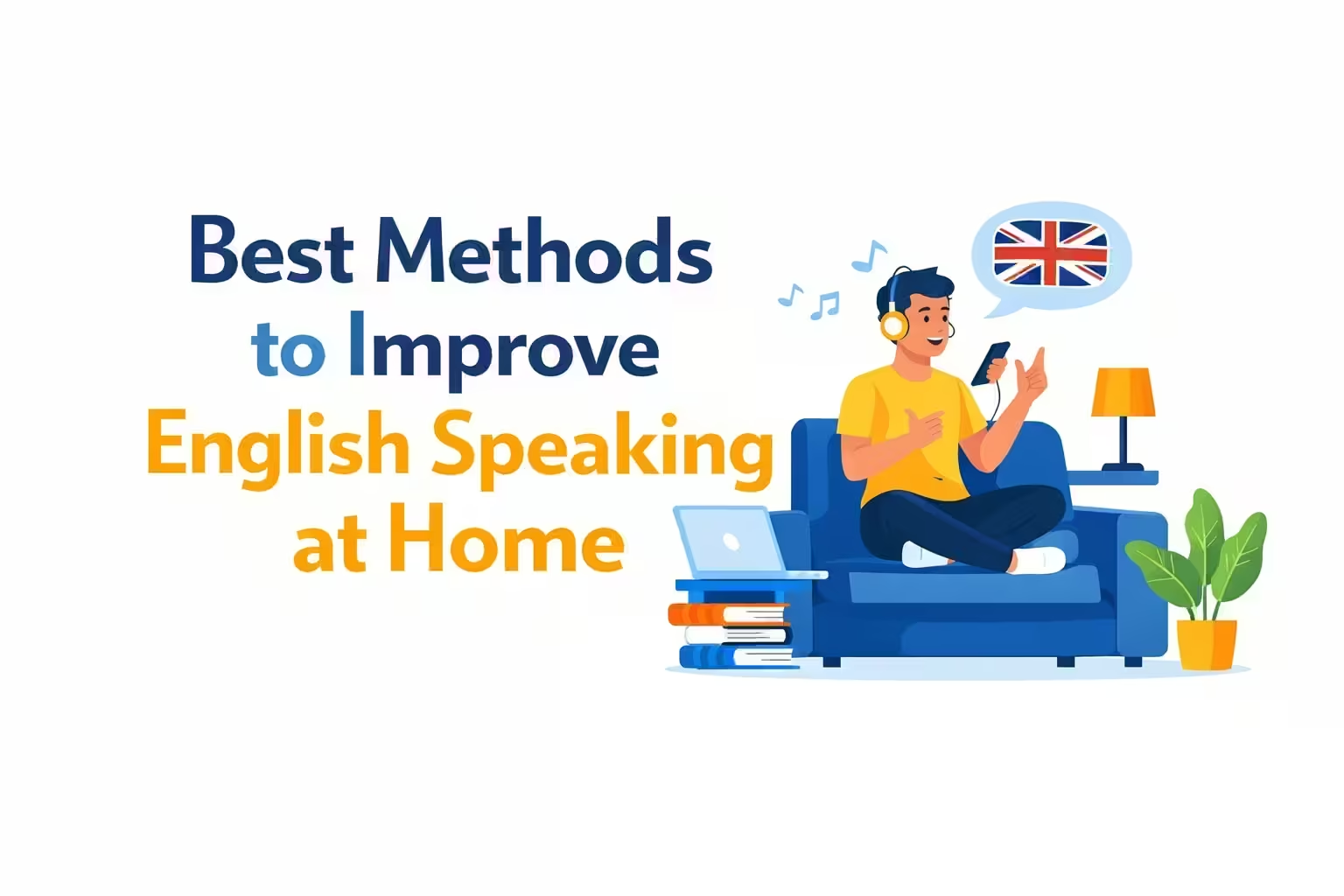
The best methods to improve English speaking at home are simple, practical, and easy to follow. Whether you are a complete beginner or already know some English, these tips will help you speak with more confidence and fluency.
In this guide, you will learn exactly how to practice English at home every day — and start seeing real results.
What Are the Best Methods to Improve English Speaking at Home?
The best methods to improve English speaking at home are daily habits, practice techniques, and learning strategies that help you get better at speaking English — without going to a school or coaching center.
These methods include activities like:
- Talking to yourself in English
- Watching English movies or YouTube videos
- Using language learning apps
- Practicing with online partners
- Repeating sentences from podcasts or audio lessons
The idea is simple: the more you hear English, speak English, and think in English — the better you become.
You do not need expensive courses or special equipment. All you need is a phone or laptop, a little time every day, and the right approach.
Why Is It Important to Improve Your English Speaking Skills?
Speaking English fluently opens many doors in life.
Here is why it matters:
1. Better Career Opportunities
Most companies today prefer candidates who can speak English well. In job interviews, presentations, and team meetings — good spoken English gives you a real advantage.
2. Higher Confidence
When you can express yourself clearly in English, you feel more confident in social situations. You stop worrying about making mistakes and start enjoying conversations.
3. Better Communication
English is a global language. Knowing how to speak it well helps you communicate with people from different countries, cultures, and backgrounds.
4. Academic Success
Many universities and schools use English as the main language of instruction. Strong speaking skills help you participate in class, ask questions, and perform better.
5. Travel and Social Life
Whether you are travelling abroad or making new friends online, English speaking skills make everything easier and more enjoyable.
Improving your spoken English is not just about language — it is about improving your life.
Types of English Speaking Skills You Need to Develop
Before we dive into the tips, let us understand the different areas of English speaking. To speak English well, you need to work on all of these:
1. Fluency
Fluency means speaking smoothly and naturally without too many pauses or stops. It does not mean speaking fast — it means speaking without getting stuck.
2. Pronunciation
Pronunciation is how clearly and correctly you say words. Poor pronunciation can make it hard for people to understand you. Good pronunciation builds confidence and clarity.
3. Vocabulary
Vocabulary is the number of words you know and use. The more words you know, the better you can express your thoughts and ideas.
4. Grammar
Grammar is the set of rules that controls how sentences are formed. You do not need to be perfect, but good grammar helps you communicate clearly and professionally.
5. Confidence
Many learners know English quite well but feel too scared to speak. Building confidence is just as important as building grammar or vocabulary skills.
6. Listening Skills
You cannot speak well if you do not listen well. Listening helps you understand natural English, pick up new words, and learn how native speakers talk.
All six of these areas work together. When you practice regularly at home, you will naturally improve in all of them.
Detailed Explanation with Examples
Let us look at how some of the best methods to improve English speaking at home actually work in real life.
Method 1: Talk to Yourself in English
This is one of the most effective and underrated techniques. When you are alone at home, start narrating what you do.
Example:
“I am making breakfast now. I am cutting vegetables. The weather looks good today. I think I will go for a walk later.”
This simple activity helps you:
- Get comfortable speaking English
- Use new words and sentences
- Build the habit of thinking in English
Start with just five minutes a day. You will be surprised how much it helps.
Method 2: Shadow Native Speakers
Shadowing means you listen to a native English speaker and immediately repeat what they say — matching their tone, speed, and pronunciation.
How to do it:
- Choose a short video or audio clip (30–60 seconds)
- Listen once fully
- Play it again and repeat each sentence right after the speaker
- Focus on their rhythm and pronunciation — not just the words
This is one of the fastest ways to improve your spoken English and pronunciation at home.
Short Dialogue Example:
Speaker: “Hi! How are you doing today?” You (shadowing): “Hi! How are you doing today?” Speaker: “I’m doing great, thanks for asking!” You: “I’m doing great, thanks for asking!”
It feels strange at first — but it works extremely well.
Method 3: Watch English Content With Subtitles
Watching English movies, TV shows, or YouTube videos is not just entertainment — it is powerful spoken English practice.
Best approach:
- Watch with English subtitles (not your native language)
- Pause and repeat sentences you like
- Write down new words and use them later
Good content to watch:
- Friends (TV show) — everyday casual English
- TED Talks — clear and formal English
- English YouTube channels for learners (like BBC Learning English or EnglishAddict with Mr Steve)
After a few weeks of regular watching, you will notice your listening and speaking improving naturally.
Method 4: Use Language Learning Apps Daily
Apps make it easy to practice spoken English at home, even for just 10–15 minutes a day.
Top apps for improving English speaking:
- Duolingo — fun, beginner-friendly lessons
- ELSA Speak — focuses specifically on pronunciation
- Cambly — connect with real English tutors via video call
- HelloTalk — practice with native speakers around the world
- Speechling — get feedback on your spoken sentences
Set a daily reminder. Even 10 minutes of app practice every day builds strong habits over time.
Method 5: Read Aloud Every Day
Pick any English text — a book, a news article, a blog post — and read it out loud. This is one of the simplest and most effective spoken English tips you can follow.
Benefits of reading aloud:
- Improves your pronunciation
- Increases your speaking speed
- Builds your confidence in saying English words correctly
- Helps your brain connect written and spoken English
Tip: Record yourself while reading. Listen back and notice what you want to improve. This self-feedback is very powerful.
Method 6: Practice with Online Language Partners
You do not need to live near a native speaker to practice. Online language exchange platforms let you practice speaking with real people from around the world — for free.
Great platforms:
- Tandem — language exchange app
- iTalki — find affordable tutors and language partners
- Speaky — connect with global learners and native speakers
- ConversationExchange.com — find partners by language and location
Try to have at least two or three speaking sessions per week. Even 20–30 minutes of real conversation practice makes a huge difference.
Method 7: Listen to English Podcasts
Podcasts are perfect for improving your listening and speaking at the same time. You can listen while cooking, exercising, or commuting.
Best English learning podcasts:
- All Ears English — casual, friendly conversations
- English Learning for Curious Minds — interesting topics with clear speech
- 6 Minute English by BBC — short, topic-based episodes
- Luke’s English Podcast — fun and detailed lessons for all levels
After listening, try to summarize what you heard — in English. Speak it out loud or write it down. This builds both comprehension and speaking skills.
Common Mistakes to Avoid When Learning to Speak English at Home
Many learners make the same mistakes. Knowing them will help you avoid them.
Mistake 1: Waiting Until Your Grammar is Perfect
Many people think, “I will speak when my grammar is better.” But grammar improves through speaking — not before speaking. Start now, even if you make mistakes.
Mistake 2: Only Studying — Not Practicing
Reading grammar books and studying vocabulary is useful. But if you never actually speak, you will never improve your spoken English. Practice speaking every single day.
Mistake 3: Translating Everything in Your Head
If you think in your native language and then translate to English, your speaking will be slow and unnatural. Train your brain to think directly in English.
Mistake 4: Being Afraid of Making Mistakes
Mistakes are a normal and necessary part of learning. Every fluent English speaker made thousands of mistakes before becoming fluent. Embrace mistakes as lessons.
Mistake 5: Practicing Inconsistently
Studying for two hours one day and then not practicing for a week does not work. Consistency matters more than intensity. Even 15–20 minutes every day is much better than a few long sessions per week.
Mistake 6: Only Practicing Alone
Self-practice is great, but it has limits. You also need real conversations with other people. Use apps, find online partners, or join speaking groups to get real practice.
Mistake 7: Ignoring Pronunciation
Some learners focus only on vocabulary and grammar and ignore how words actually sound. Poor pronunciation creates misunderstandings. Spend time on pronunciation from the beginning.
Tips, Strategies, and Best Practices to Improve English Speaking at Home
Here is a practical, easy-to-follow list of daily habits and strategies that will help you improve faster:
Daily Habits:
- Speak English for at least 15–20 minutes every day
- Keep a vocabulary notebook — write 5 new words each day
- Watch one English video or listen to one podcast episode daily
- Record yourself speaking and listen back once a week
Study Techniques:
- Use the “repeat and shadow” method with audio or video content
- Learn phrases and collocations — not just single words
- Study English in context (sentences, stories) — not just lists
- Focus on common everyday language before advanced or formal English
Motivation Tips:
- Set a clear goal — for example, “I want to speak confidently in a job interview by December”
- Celebrate small wins — finishing a conversation, learning a new phrase, or understanding a movie scene
- Join online English learning communities for support and practice
- Follow English-speaking influencers or YouTubers to stay inspired
Pronunciation Tips:
- Use Google Translate or Forvo.com to hear how words are pronounced
- Pay attention to word stress — which syllable is stronger in a word
- Practice tongue twisters to improve your mouth movement and clarity
Vocabulary Tips:
- Learn words in groups or topics (e.g., food, travel, work)
- Use new words in your own sentences the same day you learn them
- Review vocabulary regularly using apps like Anki (a spaced repetition flashcard app)
Real-Life Applications: Where You Will Use Your English Speaking Skills
Improving your English speaking at home prepares you for real situations.
Here is where you will use these skills:
At Work or In Job Interviews
Imagine walking into a job interview and answering questions clearly and confidently in English. Strong spoken English makes you stand out from other candidates. It shows professionalism, communication skills, and global readiness.
At School or University
Students who can speak English well participate more in class, give better presentations, and build stronger relationships with teachers and classmates.
While Travelling
Travelling becomes so much easier when you can speak English. You can ask for directions, order food, book hotels, and make friends — anywhere in the world.
In Social Conversations
Meeting new people, joining groups, or simply chatting with a colleague from another country — good spoken English makes all of these experiences more comfortable and enjoyable.
Online and on Social Media
More and more people are creating content, joining communities, and networking online — all in English. Strong speaking and communication skills help you participate fully in the global digital world.
Frequently Asked Questions (FAQs)
Q1: How can I improve my English speaking at home without a teacher?
You can improve your English speaking at home by talking to yourself, watching English videos, shadowing native speakers, using language learning apps, and finding online conversation partners. Consistency and daily practice are the most important factors.
Q2: How long does it take to become fluent in English speaking?
It depends on your starting level and how much you practice. With daily practice of 30–60 minutes, many learners notice significant improvement within 3–6 months. Full fluency typically takes 1–2 years of consistent effort.
Q3: What are the best free resources to improve English speaking skills at home?
Some of the best free resources include:
- BBC Learning English (website and YouTube channel)
- Duolingo (app)
- HelloTalk (language exchange app)
- 6 Minute English podcast by BBC
- TED Talks on YouTube with English subtitles
Q4: How do I improve my English pronunciation at home?
To improve your pronunciation at home, try these methods:
- Shadow native speakers by repeating what they say
- Use ELSA Speak app for pronunciation feedback
- Record yourself and compare with native speakers
- Watch your mouth movement using a mirror when speaking
- Focus on word stress and intonation, not just individual sounds
Q5: Is it possible to speak English fluently just by practicing at home?
Yes, absolutely. Many people have become fluent English speakers by practicing consistently at home. The key is to use a combination of methods — listening, speaking, reading aloud, and having real conversations online. Home practice, when done correctly and consistently, is just as effective as attending classes.
Q6: What is the fastest way to improve spoken English?
The fastest way to improve spoken English is through immersion and consistent speaking practice. This means surrounding yourself with English as much as possible — watching English content, speaking English daily, listening to podcasts, and having real conversations with others. Shadowing native speakers is also one of the most effective techniques for quick improvement.
Q7: How can beginners start speaking English at home?
Beginners should start simple:
- Learn basic greetings and everyday phrases first
- Practice saying them out loud every day
- Watch beginner English videos on YouTube
- Use an app like Duolingo for structured lessons
- Gradually increase difficulty as your confidence grows
Conclusion
Improving your English speaking skills does not require expensive classes, a perfect grammar book, or moving to an English-speaking country. All you need is the right approach, a little time each day, and the willingness to practice — even when it feels uncomfortable.
The best methods to improve English speaking at home are all within your reach. Start by talking to yourself in English. Shadow your favorite speakers. Watch shows with English subtitles. Find a conversation partner online. Use apps that make learning fun. Read aloud and record yourself. Build the habit — and the results will follow.
Remember: every great English speaker was once a beginner. The only difference between them and someone who never improves is consistent daily practice.
Your next step: Choose just ONE method from this article and start today. Not tomorrow — today. Even five minutes of practice right now is better than waiting for the “perfect moment.”
If you found this article helpful, share it with a friend who is also learning English. And if you want more practical English learning tips, keep reading and keep practicing — you are already on the right path.
Enjoy more related topics here:
- How to Become Fluent in English in 30 Days: A Complete Step-by-Step Guide
- English Speaking: 150 English Sentences for Phone Conversations
- When to Use Semicolons vs. Commas in English Grammar
- 150 English Sentences to Improve Fluency for Speaking English
- Complete Guide to English Phrasal Verbs (With Meanings) | Learn & Use Easily
Want to improve English fast? Check out similar topics here on Spoken English Practice.